


Restaurant & Bar Interior Design Trends 2026
Emotional Architecture — The Defining Shift of 2026
01. From Industrial Cool to Human Warmth
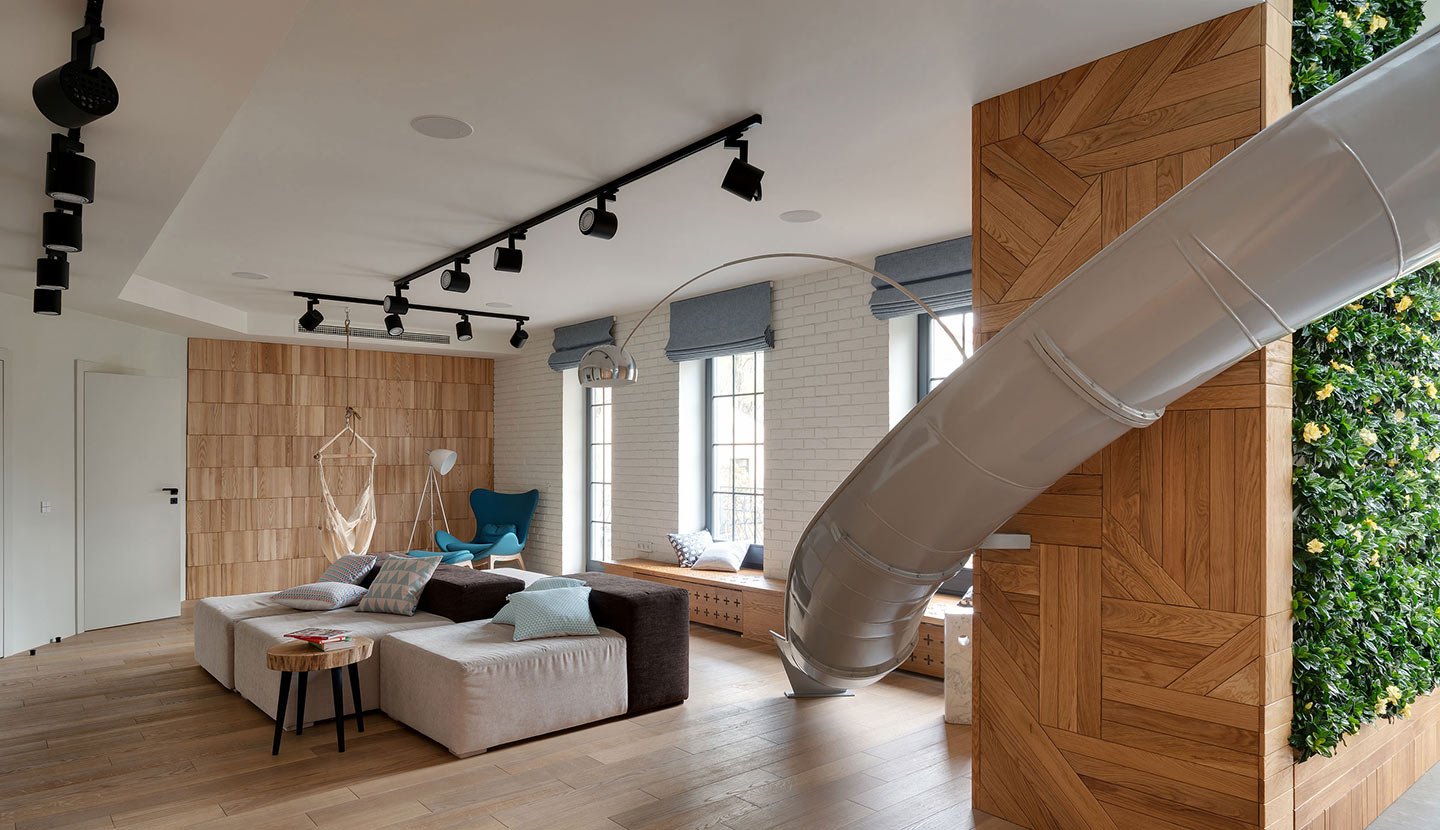
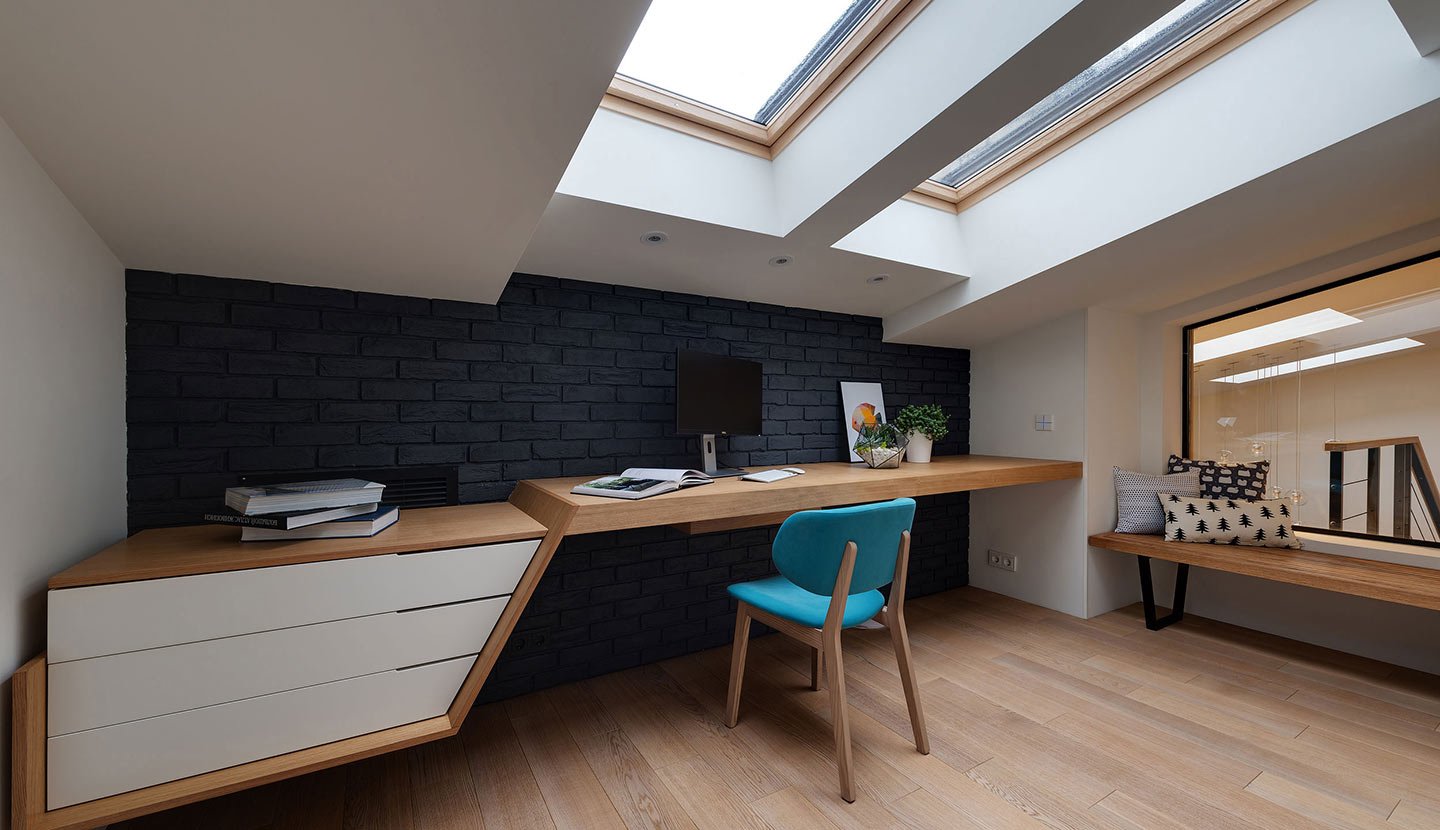
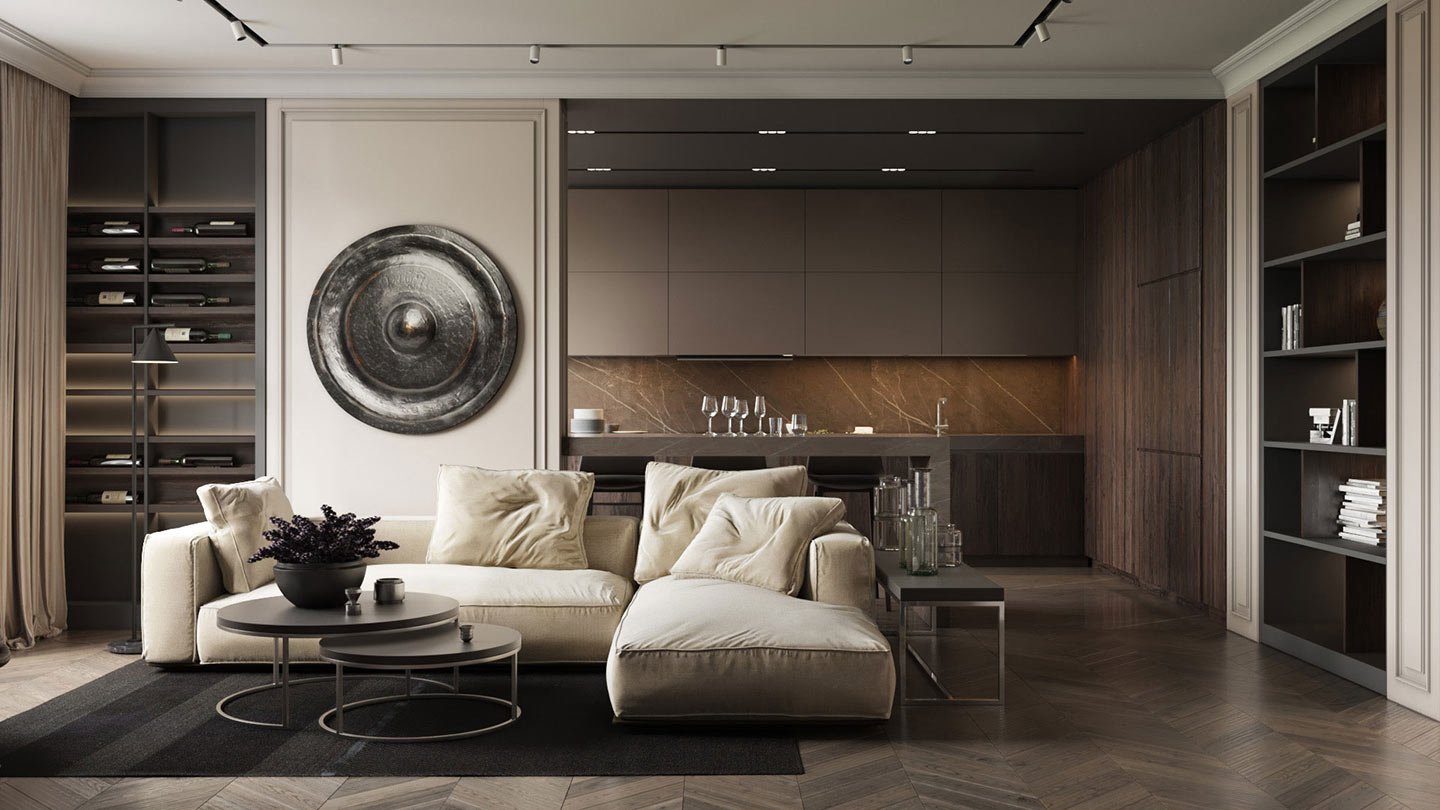
The era of the “sterile industrial” coffee shop or restaurant — with its cold concrete floors, exposed ductwork, and uncomfortable metal stools — is officially behind us. As we move through 2026, hospitality design is undergoing a massive shift toward what industry experts are calling “Emotional Architecture.” It is no longer enough for a space to look good on a screen; it has to feel good to the human body and spirit.
The biggest restaurant design trends include warm minimalism, flexible seating, local identity, sustainability, and stronger acoustic planning. The overall direction is toward spaces that feel more human and less generic — interiors that are warm, adaptable, durable, and emotionally legible. The next generation of restaurant spaces will not be defined by a single aesthetic; they will be defined by how well they support the full guest journey: arrival, seating, dining, conversation, and departure.

Layout & Guest Flow — The Operational Foundation
02. Layout Is Not a Technical Afterthought
In restaurant interior design, layout is not a technical afterthought — it is one of the main drivers of revenue and guest satisfaction. A beautiful room fails if servers cannot move efficiently. Pathways should be generous enough for staff carrying trays and guests moving to restrooms or exits. Avoid bottlenecks near host stands, bar entries, and service stations.
Different parts of the room should support different experiences. Place high-energy seating near the bar or entrance, quieter tables deeper inside, and transitional zones where guests can wait comfortably. This zoning is especially important in 2026 hospitality design, where guests are more likely to choose spaces based on mood as much as menu. An overlooked part of interior design is the path servers take — a cluttered path means slower service and colder food.
- Arrival
Your entrance is your first handshake. It should provide a clear transition from the busy street to your restaurant’s unique world — a deliberate threshold moment, not an afterthought.
- Waiting & Seating
A clear separation between waiting-to-be-seated and pickup/takeaway zones avoids confusion and congestion. Transitional zones let guests wait comfortably without blocking circulation.
- Dining
High-energy seating near the bar or entrance; quieter tables deeper inside. Guests should understand the room quickly — good sightlines help a restaurant feel larger, clearer, and more intentional.
- Service & Conversation
Generous server pathways prevent bottlenecks and keep food hot. The room should support conversation comfortably — a “comfortable buzz” rather than either silence or chaos.
- Departure
The exit experience matters as much as the entrance — a considered close to the guest journey leaves the final impression that shapes whether they return and what they tell others.

Flexible & Strategic Seating
03. Mixing Booths, Communal Tables & Bar Seating
Consumer preferences are shifting towards more intimate and exclusive dining experiences. Research indicates that 36% of Americans express a desire for more group and private dining options in 2026. In 2026, the trend is “flexible seating” — using a mix of booths for privacy and communal tables for social vibes allows operators to cater to different customer segments simultaneously, ensuring operational agility for private events, social trends, or evolving customer preferences.
Counter seating and bar-height tables and chairs have experienced a notable increase in popularity in recent years. Sitting on a bar stool places guests at eye level with standing guests or bartenders, facilitating conversations that are more engaging and enjoyable. This seating arrangement encourages people to gather in groups, promoting a sense of community and camaraderie, while also enabling restaurants to optimise vertical space utilisation.
| Seating Type | 2026 Trend Data | Best For | Design Consideration |
|---|---|---|---|
| Counter Seating | +26% YoY growth | Solo diners, quick service, watching food prep | Open kitchen sightline, comfortable stool height, personal space between seats |
| Bar Seating | +23% YoY growth | Social groups, eye-level conversation with bartenders | Maximises vertical space; ideal footprint efficiency for larger groups |
| Booth Seating | 36% want more private options | Privacy, intimate conversation, longer dwell time | Upholstered backs double as acoustic treatment; positioned away from high traffic |
| Communal Tables | Rising for social dining | Larger groups, social connection-seeking diners | Central placement; works with flexible/modular table systems for reconfiguration |

The Three Layers of Restaurant Lighting
04. Lighting as the Emotional Rhythm of the Room
Lighting is the most cost-effective way to change the mood of a room. Lighting becomes a tool that shapes the emotional rhythm of a restaurant. Layers of light — soft background lighting, directional accents, decorative installations, illuminated textures — create a flexible atmosphere that changes depending on the scenario. An evening dinner, a business meeting, or a morning breakfast are perceived differently thanks to the light, which helps the space adapt to the time of day and the mood of the guests.
Lighting is no longer static. Smart systems in restaurants adjust brightness, colour, and intensity based on time of day or theme. Strategic lighting plays a crucial role in creating unforgettable restaurant experiences — and it is also among the most layered and adaptive trends shaping 2026 hospitality design overall.
The Three Essential Lighting Layers
💡
- Layer 1 — Ambient Base
The base layer that ensures guests can move safely and feel comfortable throughout the space. Sets the overall brightness and warmth of the room without drawing attention to itself.
🎯
- Layer 2 — Task & Accent
Focused lights over tables or the bar area so customers can read the menu easily. Directional and intentional — supporting function while contributing to atmosphere.
✨
- Layer 3 — Personality & Brand
This is where you inject personality. Restaurant neon signs are one of the most dominant trends this year, acting as a bridge between lighting and branding — providing a signature glow that guests photograph and share.

Acoustic Design — Solving Restaurants
05. Managing Noise Without Killing Energy
One of the biggest complaints in restaurant reviews is noise levels. A great design must account for sound management. Hard floors and glass walls bounce sound, while adding rugs, acoustic wall panels, or heavy curtains absorbs it. The goal is a “comfortable buzz” where diners feel their conversation is private but the room still feels alive.
Trending interior elements for 2026 include acoustic ceiling panels specifically designed to minimise noise alongside natural materials like wood, linen, and terracotta. Acoustic planning should be considered at the design stage alongside layout and lighting — not retrofitted after guests start complaining in reviews.
Restaurant Acoustic Strategies for 2026
- Upholstered banquette backs — booth seating with substantial upholstered backing absorbs sound while providing privacy, serving double duty as both furniture and acoustic treatment
- Acoustic ceiling panels — fabric-wrapped or felt ceiling treatments, increasingly designed as visual features rather than purely functional add-ons
- Rugs and soft flooring zones — strategically placed to absorb footstep and ambient noise in areas where hard flooring would otherwise amplify sound
- Heavy curtains and textile wall treatments — particularly effective near glass walls and windows, which otherwise bounce sound throughout the room
- The comfortable buzz target — the goal is never silence, but controlled energy: diners should feel their own conversation is private while the room overall feels lively and successful

Colour Palettes That Drive Appetite & Atmosphere
06. Earthy Tones, Jewel Accents & Strategic Neutrals
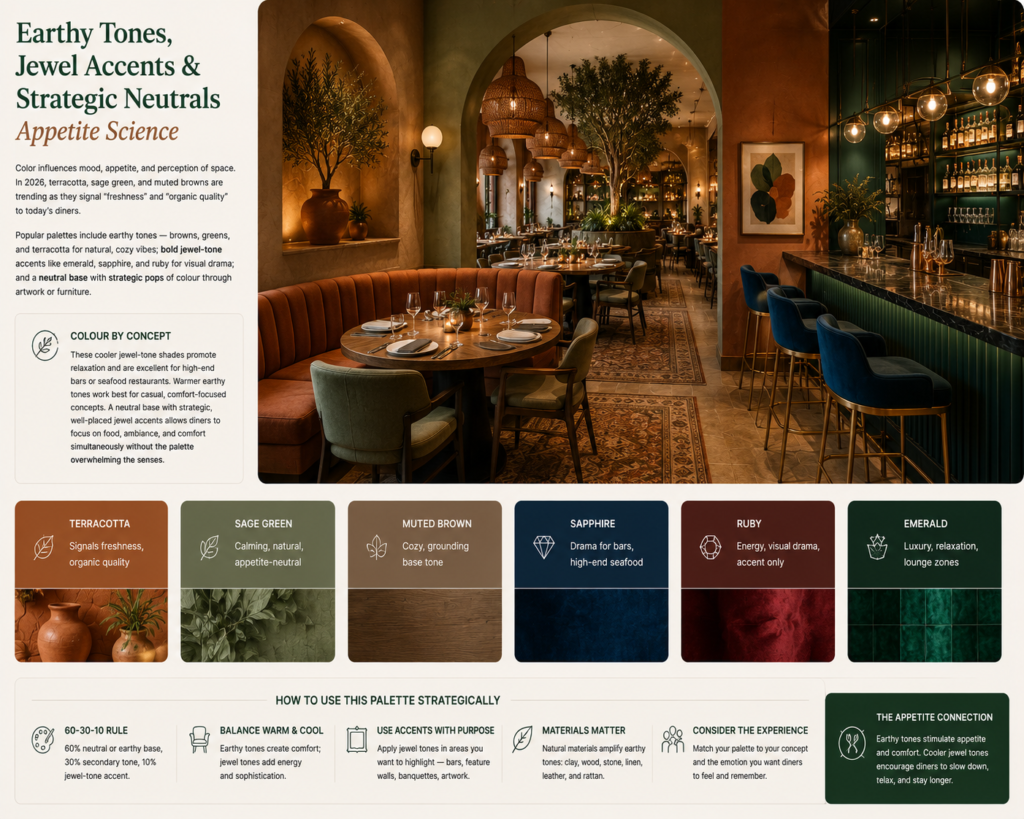
Color influences mood, appetite, and perception of space. In 2026, terracotta, sage green, and muted browns are trending as they signal “freshness” and “organic quality” to today’s diners. Popular palettes include earthy tones — browns, greens, and terracotta for natural, cozy vibes; bold jewel-tone accents like emerald, sapphire, and ruby for visual drama; and a neutral base with strategic pops of colour through artwork or furniture.
- TerracottaSignals freshness, organic quality
- Sage GreenCalming, natural, appetite-neutral
- Muted BrownCozy, grounding base tone
- SapphireDrama for bars, high-end seafood
- RubyEnergy, visual drama, accent only
- EmeraldLuxury, relaxation, lounge zones
Materials, Sustainability & Local Identity
07. Storytelling Through Material Choice
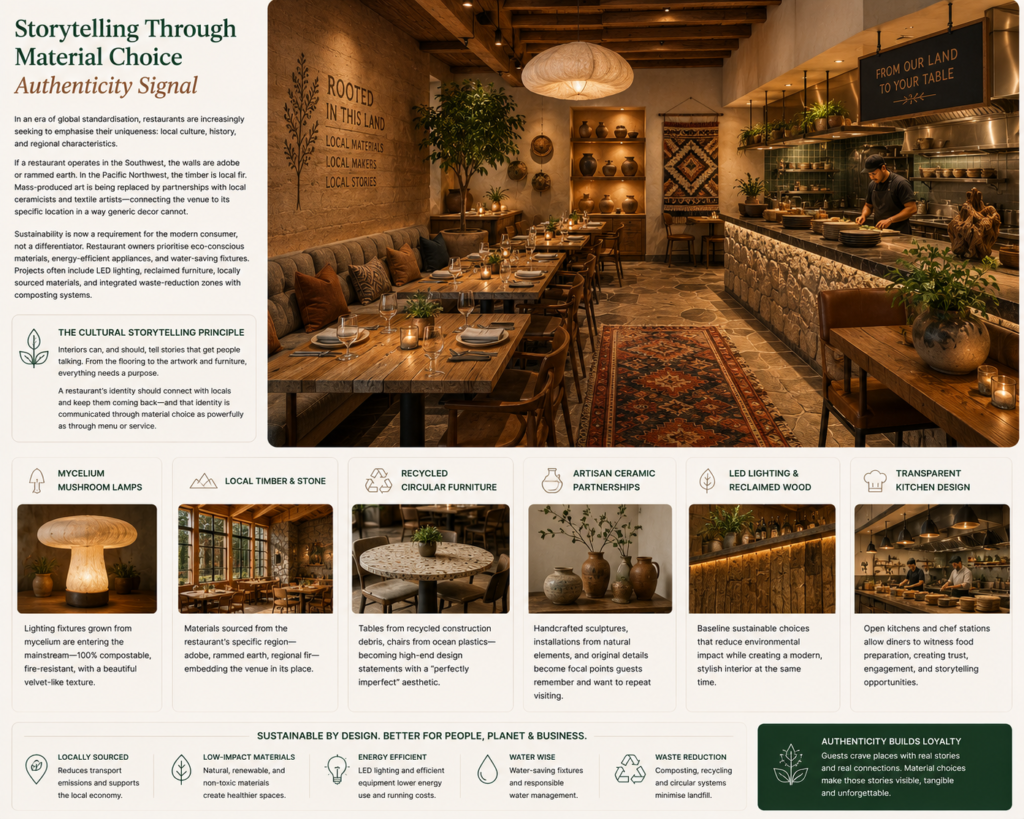
In an era of global standardisation, restaurants are increasingly seeking to emphasise their uniqueness: local culture, history, and regional characteristics. If a restaurant operates in the Southwest, the walls are adobe or rammed earth. In the Pacific Northwest, the timber is local fir. Mass-produced art is being replaced by partnerships with local ceramicists and textile artists — connecting the venue to its specific location in a way generic decor cannot.
Sustainability is now a requirement for the modern consumer, not a differentiator. Restaurant owners prioritise eco-conscious materials, energy-efficient appliances, and water-saving fixtures. Projects often include LED lighting, reclaimed furniture, locally sourced materials, and integrated waste-reduction zones with composting systems.
- Mycelium
Mushroom LampsLighting fixtures grown from mycelium are entering the mainstream — 100% compostable, fire-resistant, with a beautiful velvet-like texture
- Local Stone
Local Timber & StoneMaterials sourced from the restaurant’s specific region — adobe, rammed earth, regional fir — embedding the venue in its place
- Recycled
Circular FurnitureTables from recycled construction debris, chairs from ocean plastics — becoming high-end design statements with a “perfectly imperfect” aesthetic
- Artisan Ceramic
Local Ceramicist PartnershipsHandcrafted sculptures, installations from natural elements, and original details become focal points guests remember and want to repeat visiting
- LED + Reclaimed
LED Lighting & Reclaimed WoodBaseline sustainable choices that reduce environmental impact while creating a modern, stylish interior at the same time
- Open Kitchen
Transparent Kitchen DesignOpen kitchens and chef stations allow diners to witness food preparation, creating trust, engagement, and storytelling opportunities
The Restroom as a Marketing Tool
08. The “Surprise Portal” Trend
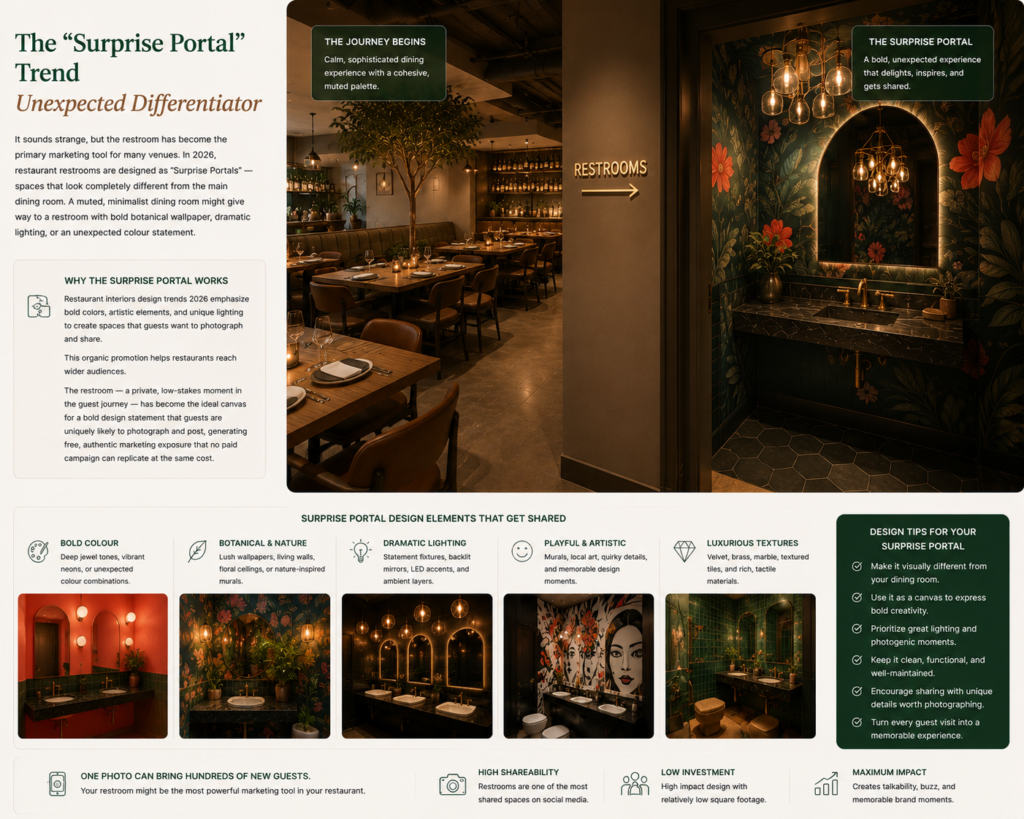
It sounds strange, but the restroom has become the primary marketing tool for many venues. In 2026, restaurant restrooms are designed as “Surprise Portals” — spaces that look completely different from the main dining room. A muted, minimalist dining room might give way to a restroom with bold botanical wallpaper, dramatic lighting, or an unexpected colour statement.
Why the Surprise Portal Works
Restaurant interiors design trends 2026 emphasize bold colors, artistic elements, and unique lighting to create spaces that guests want to photograph and share. This organic promotion helps restaurants reach wider audiences. The restroom — a private, low-stakes moment in the guest journey — has become the ideal canvas for a bold design statement that guests are uniquely likely to photograph and post, generating free, authentic marketing exposure that no paid campaign can replicate at the same cost.
Bar-Specific Design & Cocktail Theatre
09. Atmosphere as Revenue Multiplier
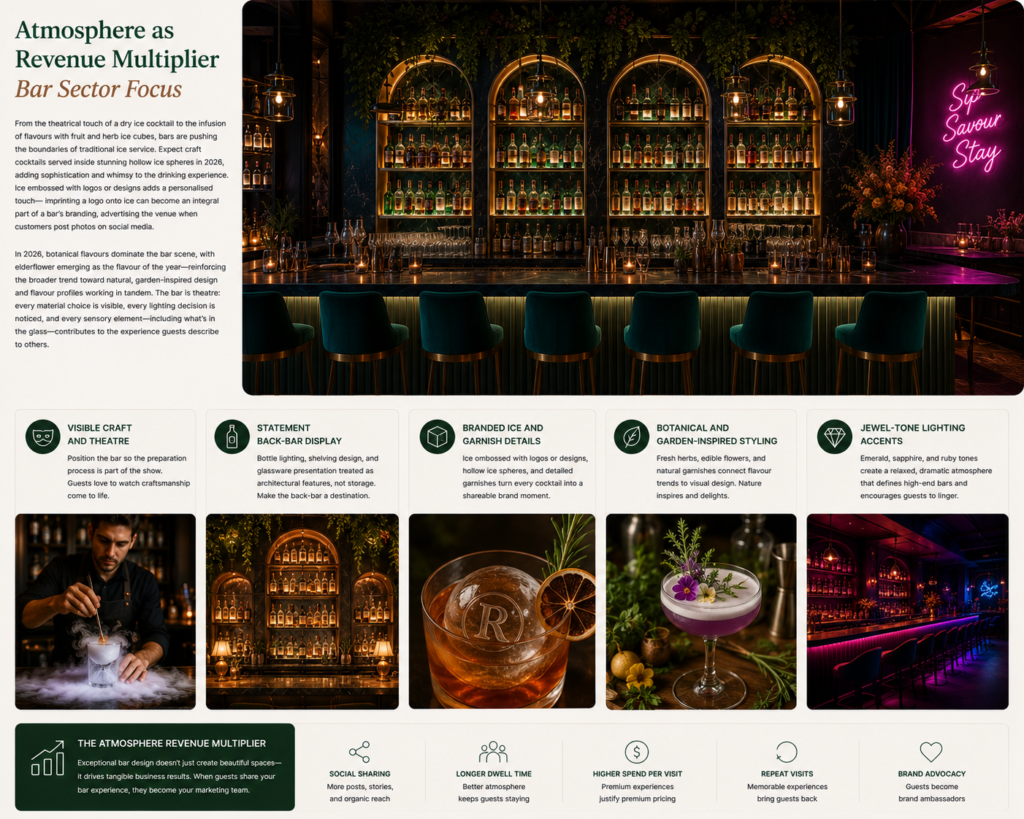
From the theatrical touch of a dry ice cocktail to the infusion of flavours with fruit and herb ice cubes, bars are pushing the boundaries of traditional ice service. Expect craft cocktails served inside stunning hollow ice spheres in 2026, adding sophistication and whimsy to the drinking experience. Ice embossed with logos or designs adds a personalised touch — imprinting a logo onto ice can become an integral part of a bar’s branding, advertising the venue when customers post photos on social media.
In 2026, botanical flavours dominate the bar scene, with elderflower emerging as the flavour of the year — reinforcing the broader trend toward natural, garden-inspired design and flavour profiles working in tandem. The bar is theatre: every material choice is visible, every lighting decision is noticed, and every sensory element — including what’s in the glass — contributes to the experience guests describe to others.
Bar Design Elements That Drive Social Sharing
- Visible craft and theatre — positioning the bar so the preparation process itself is part of the show, not hidden behind a partition
- Statement back-bar display — bottle lighting, shelving design, and glassware presentation treated as architectural features, not storage
- Branded ice and garnish details — small, photographable details that extend brand identity into the product itself
- Botanical and garden-inspired styling — fresh herbs, edible flowers, and natural garnish presentation connecting flavour trends to visual design
- Jewel-tone lighting accents — emerald, sapphire and ruby tones used strategically to create the relaxed, dramatic atmosphere associated with high-end bars
Outdoor Dining as a Permanent Design Element
10. From Pandemic Necessity to Design Standard
The shift toward outdoor dining, which began during the pandemic, has now become a long-term design feature. Restaurants are investing in permanent outdoor extensions that match the aesthetics and comfort of indoor spaces. Expect all-weather patios with retractable roofs, advanced HVAC zoning, heated flooring for year-round comfort, and biophilic touches such as plants, stone, and wood finishes. Modern diners seek connection to the outdoors, and restaurant owners are responding by making exterior spaces an integral part of the guest experience rather than a seasonal afterthought.

Technology Integration in F&B Spaces
11. Convenience Without Compromising the Experience
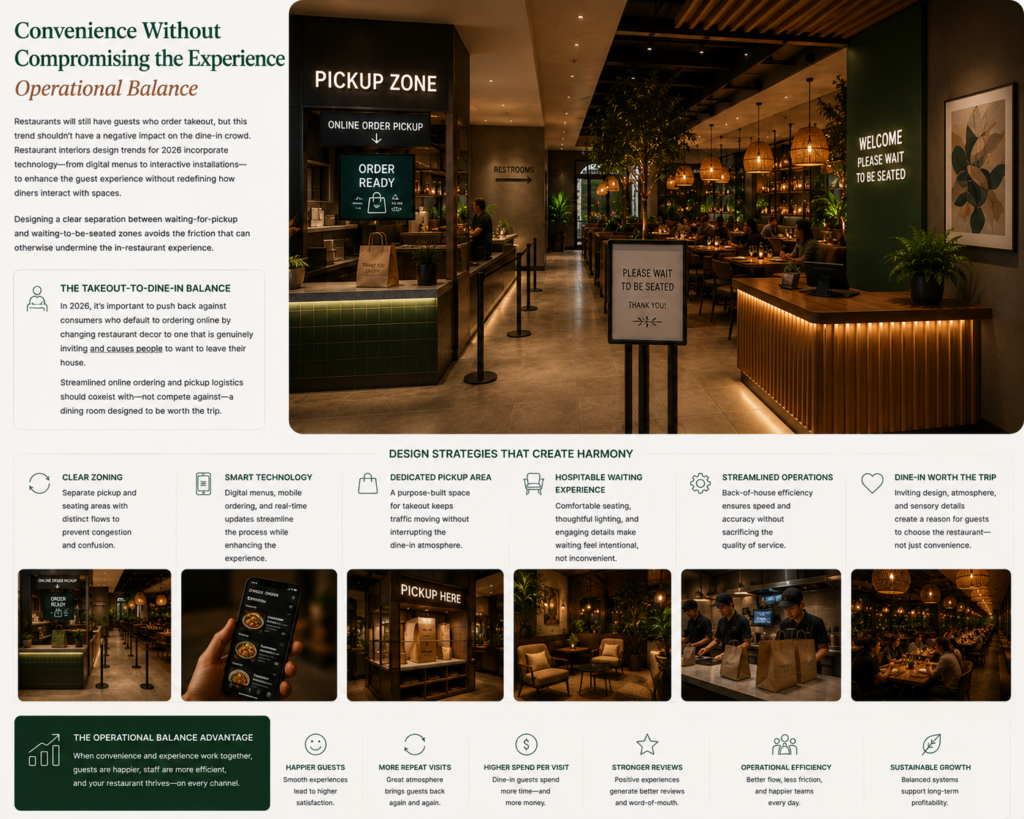
Restaurants will still have guests who order takeout, but this trend shouldn’t have a negative impact on the dine-in crowd. Restaurant interiors design trends for 2026 incorporate technology — from digital menus to interactive installations — to enhance the guest experience without redefining how diners interact with spaces. Designing a clear separation between waiting-for-pickup and waiting-to-be-seated zones avoids the friction that can otherwise undermine the in-restaurant experience.
The takeout-to-dine-in balance: In 2026, it’s important to push back against consumers who default to ordering online by changing restaurant decor to one that is genuinely inviting and causes people to want to leave their house. Streamlined online ordering and pickup logistics should coexist with — not compete against — a dining room designed to be worth the trip.
Design ROI for Restaurants & Bars
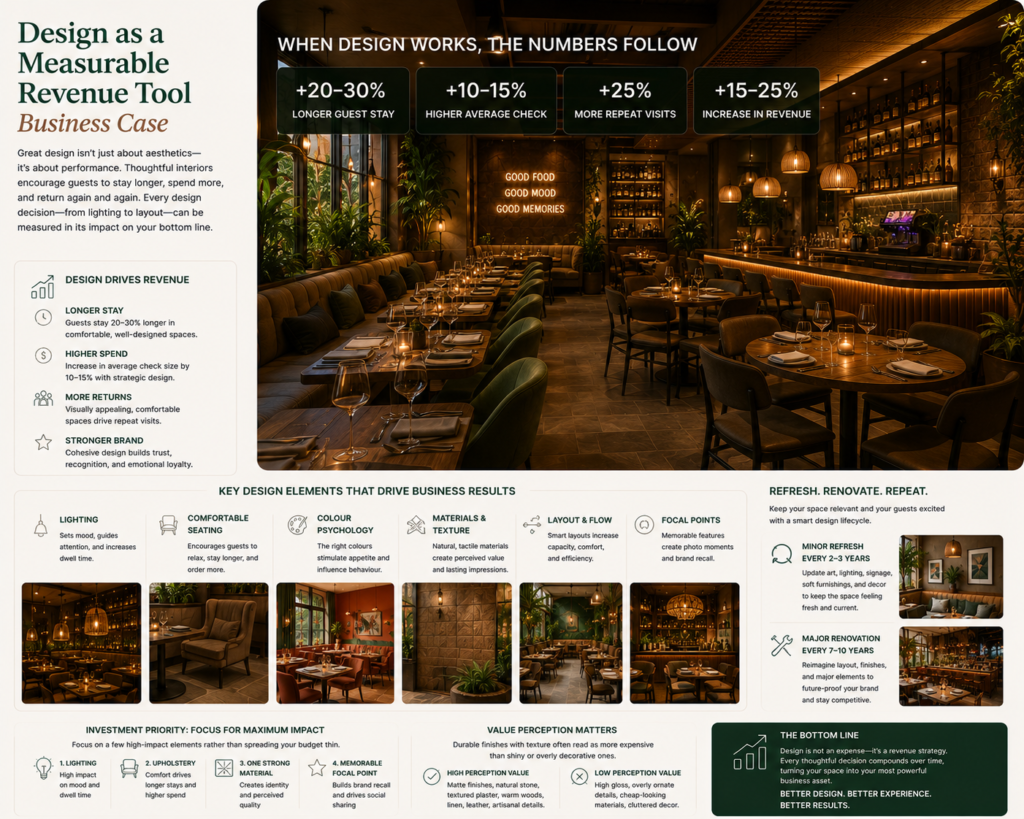
12. Design as a Measurable Revenue Tool
Well-designed interiors encourage guests to stay longer, increasing overall spending. Comfortable seating, thoughtful layouts, and appealing aesthetics all contribute to this effect — design helps businesses establish a strong brand identity, communicating the restaurant’s concept and values and creating a cohesive experience that builds trust and recognition. Strategic choices like colour psychology to stimulate appetite and comfortable seating directly impact average check size.
When the space is thought out down to the smallest detail, guests feel ease and comfort, which directly affects the average check and return rate. It is design and atmosphere that become tools for attracting guests, increasing their length of stay, and creating “emotional loyalty.” A minor refresh — art, lighting, or signage — is recommended every 2–3 years, with a major renovation every 7–10 years, to keep a restaurant’s design relevant without requiring constant capital reinvestment.
The investment priority for restaurant and bar operators: Focus on a few high-impact elements — lighting, upholstery, one strong material, and a memorable focal point — rather than spreading budget thinly across many smaller decisions. Durable finishes with texture often read as more expensive than shiny or overly decorative ones, delivering a stronger perception return per pound spent.