


Café & Coffee Shop Interior Design 2026
The 2026 Café Design Shift
01. From Social Media Backdrop to Genuine Human Environment
Trends in bar and café design reflect a clear shift towards more carefully curated, versatile spaces with a more clearly defined identity. Interior design is becoming increasingly important as part of a business’s offering and is now seen not only as an aesthetic consideration, but also as a way to enhance the customer experience, strengthen brand positioning and adapt to new ways of using the space.
Whether you’re visiting an independent coffee shop or a newly opened specialty café, the interiors often feature the same combination of natural wood, neutral colours, minimalist décor, hanging plants, and cosy seating. This shift isn’t happening by accident. Social media platforms, customer expectations, successful café brands, and the growing influence of interior design trends have all shaped the way coffee shops are built in 2026.
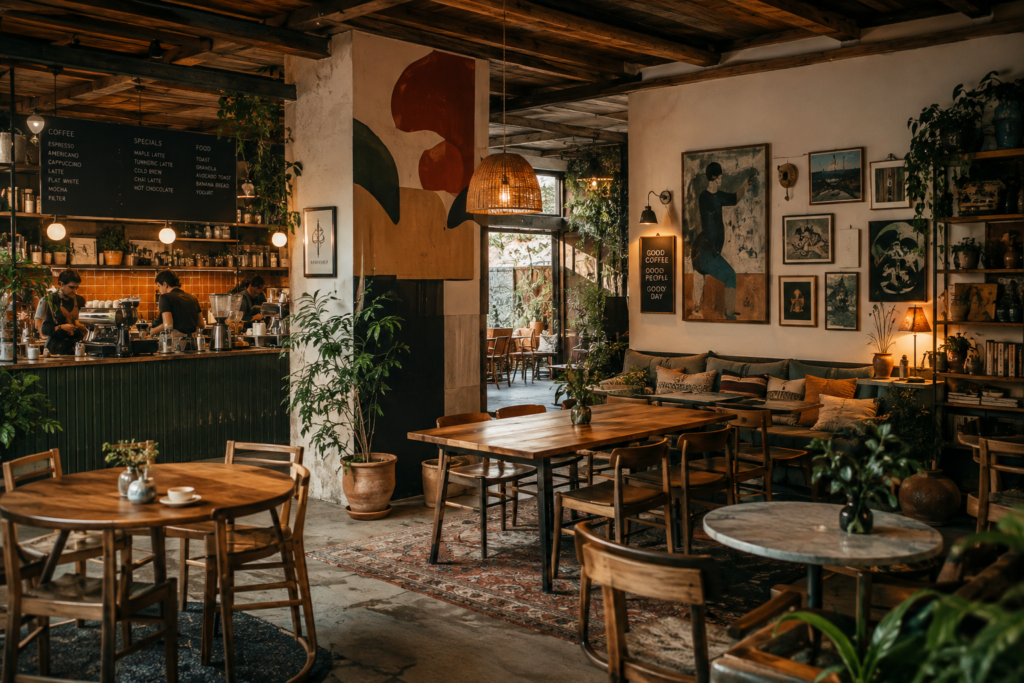
Warm Minimalism — The Dominant Café Aesthetic
02. Natural Materials, Neutral Tones & Layered Texture
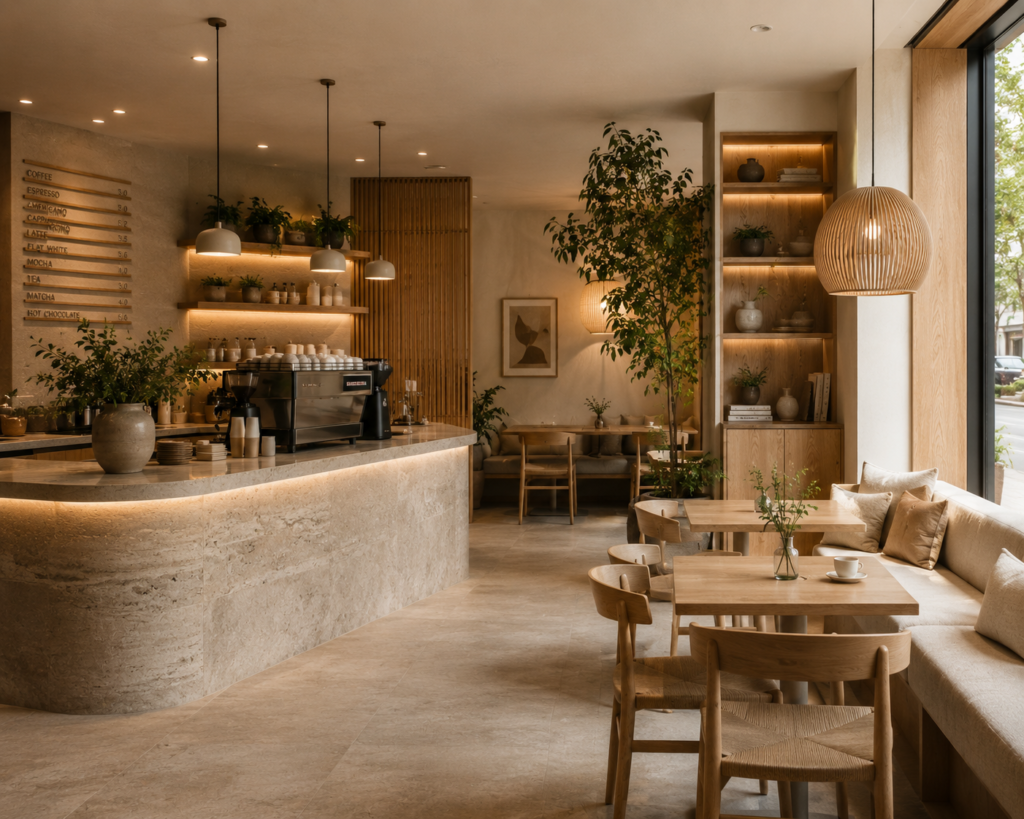
Warm minimalism combined with sustainable materials and biophilic elements is currently the most in-demand café interior design style in 2026. It combines restrained, uncluttered layouts with natural materials, warm neutral colour palettes, and layered textures to create spaces that feel inviting and considered without visual noise. The result is a café that feels calm and comfortable, encourages longer visits, and photographs well without relying on a single photogenic moment.
The Nordic style remains a very valid choice for bars and cafés seeking to convey order, visual spaciousness and a sense of calm. Sustainability continues to establish itself as one of the main trends, but with an increasingly practical and demanding approach — it is no longer enough for a space to merely appear sustainable: durable materials, more responsible production processes and solutions that help extend the project’s lifespan are valued.
Emotional Architecture — Designing How It Feels
03. The Space Must Feel Good, Not Just Look Good
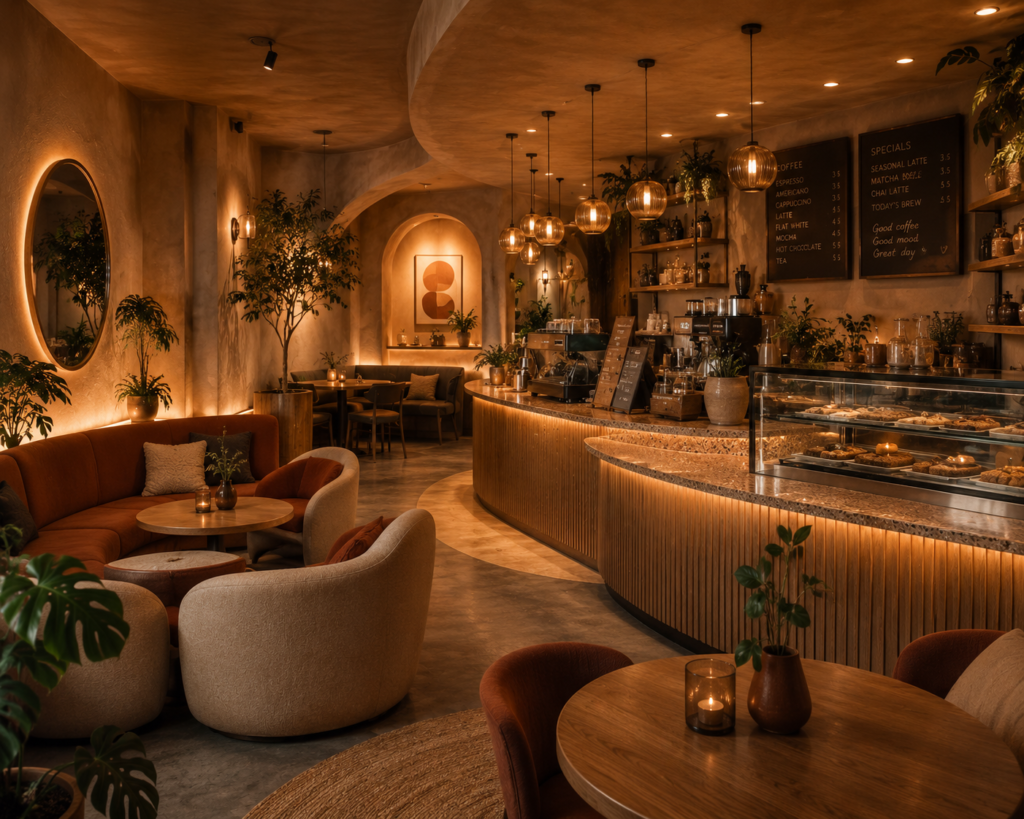
Emotional Architecture is no longer enough for a space to look good on a screen; it has to feel good to the human body and spirit. Whether you are launching a new bistro, a high-volume café, or refreshing a tired neighbourhood bar, the trends for 2026 are defined by warmth, hyper-personalisation, and a seamless blend of invisible technology.
A well-designed café creates comfort, emotion, and a strong brand feeling that customers remember. The ambiance of a coffee shop directly affects customer behaviour. A warm, welcoming interior design makes customers feel relaxed and comfortable, encouraging them to stay longer and order more. When people enjoy the environment, they are more likely to return and recommend the café to others. Great coffee shop interior design turns first-time visitors into loyal customers.
Material Contrast — The Layered Café
04. Soft Against Hard, Matte Against Reflective, Warm Against Cool
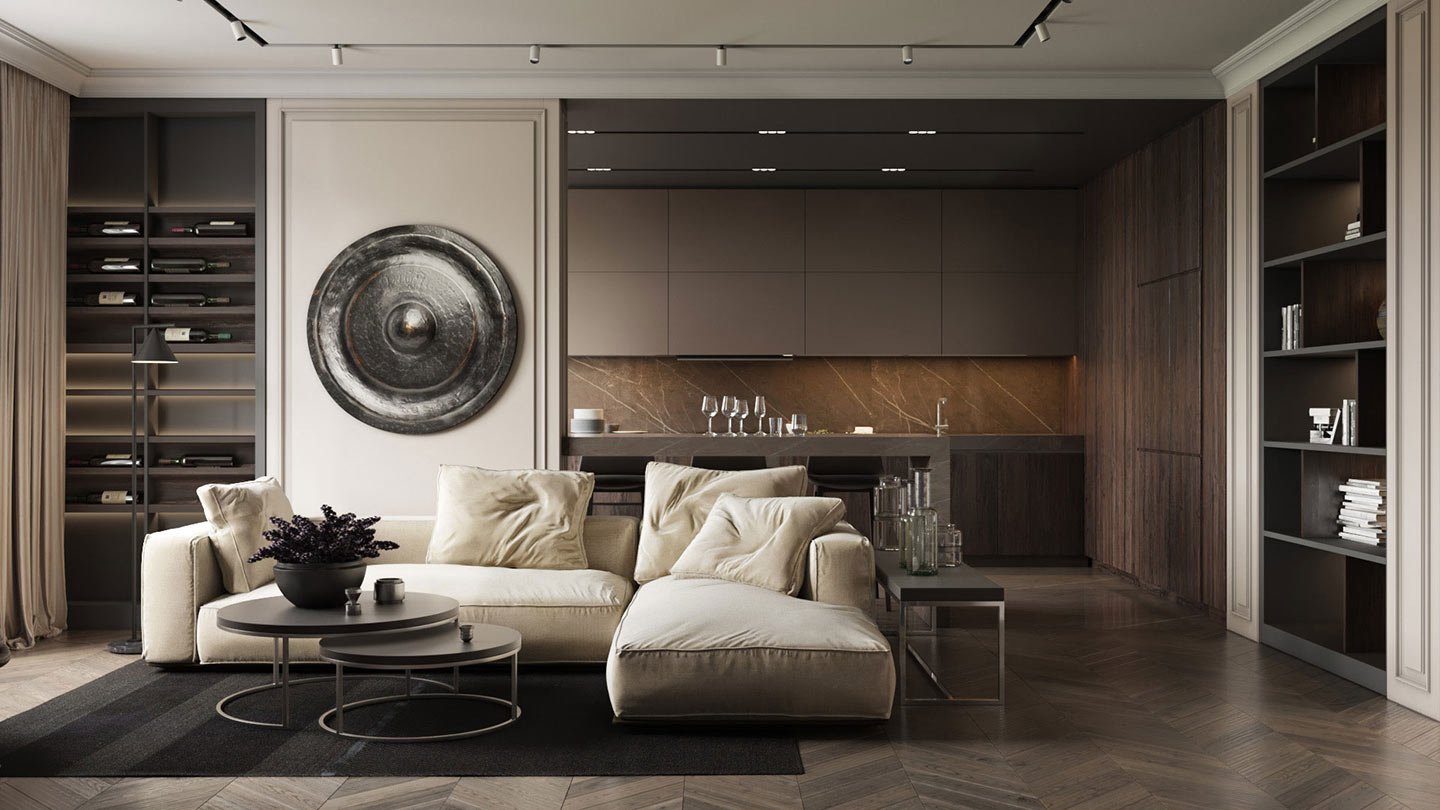
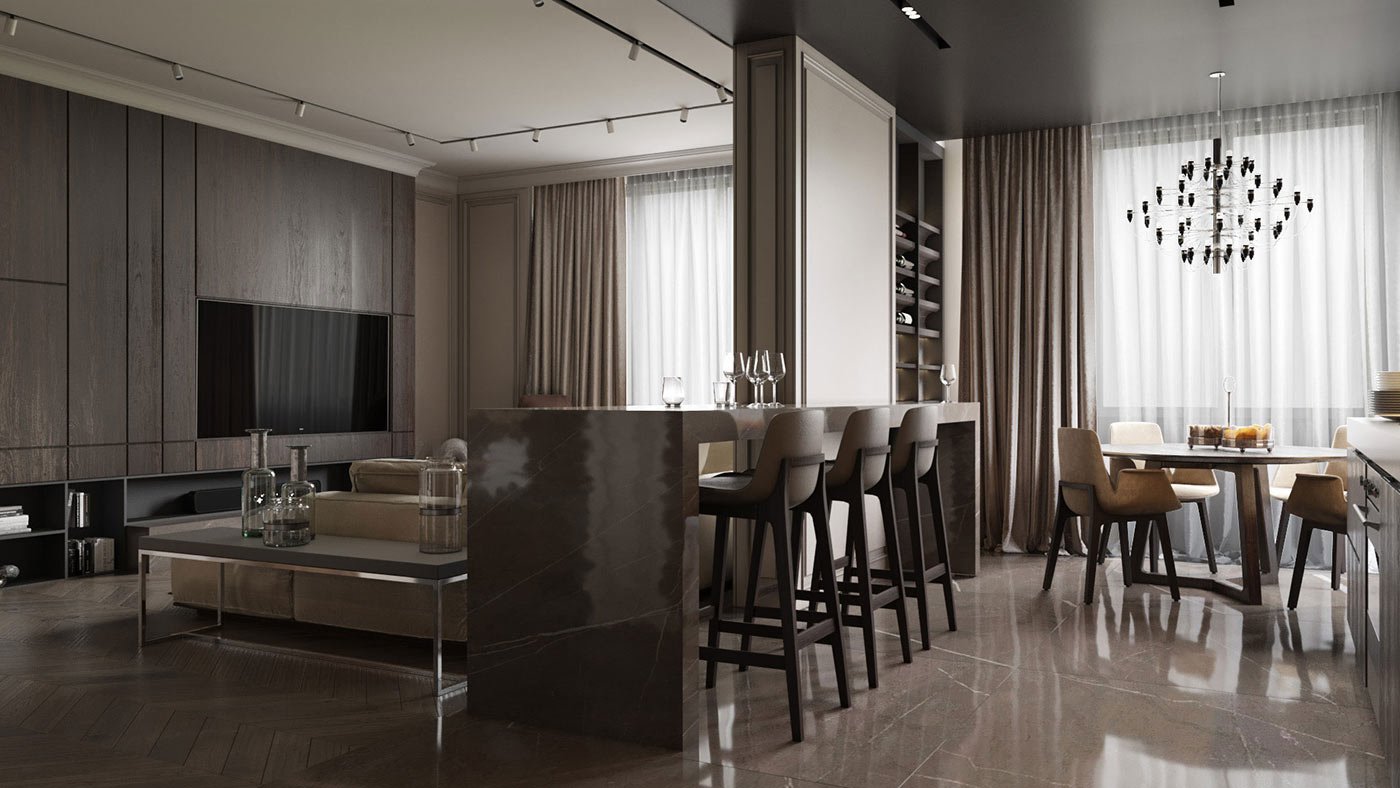
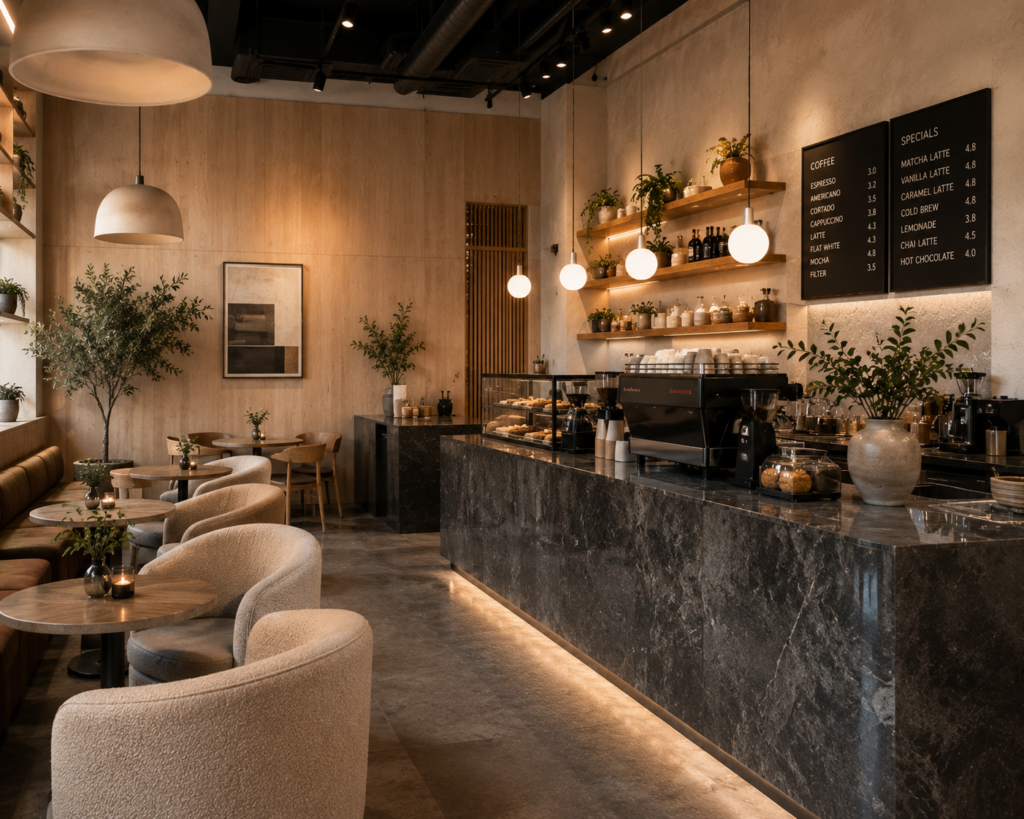
Retail design trends continue to favour contrast: soft against hard, matte against reflective, warm against cool. A pale oak wall may pair well with a darker stone counter. A polished concrete floor can be balanced with upholstered seating and pendant lighting that adds softness overhead. These combinations help a space feel layered without becoming overcomplicated.
Material Contrast Principles for Café Design 2026
- Warm wood against cool stone — the foundational contrast pairing of 2026 café design; oak or walnut shelving and furniture against a stone or concrete counter creates warmth without sacrificing the precision and cleanliness of the service zone
- Matte walls against polished surfaces — matte plaster or paint on walls absorbs light and feels calm; a polished stone counter or glossy tile splashback introduces reflected light and visual energy at the bar where it is appropriate
- Soft upholstery against hard flooring — upholstered seating on a hard stone or wood floor dramatically increases the perceived comfort and dwell-time invitation of the seating zone
- Limit materials to three or four throughout — the most common material mistake in café design is using too many; three well-chosen materials in deliberate contrast read as considered, while five or more reads as confused
- Texture over pattern — textured plaster, ribbed tile, fluted wood panelling, and woven textile all add visual richness without the dateable quality of printed or patterned surfaces
Café Colour Palettes 2026
05. Warm, Grounding & Brand-Specific
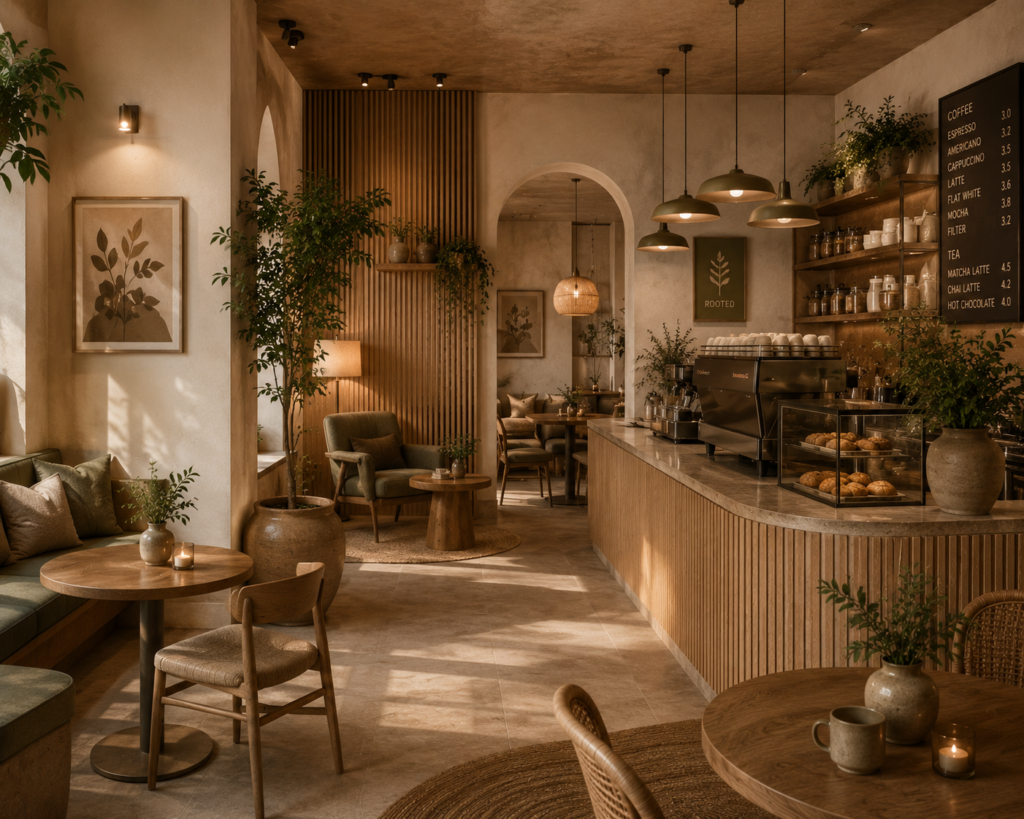
Colours play a major role in commercial interior design and influence customer mood and perception. Warm tones like beige, brown, and cream create cosiness and comfort, while green and blue add calmness and balance. Neutral colours keep the space elegant and allow food and drinks to visually stand out. Your coffee interior design tells your brand story without words.
Warm BeigeComfortable base
Warm BrownBrand anchor
Sage GreenCalm accent
Warm StoneNeutral elegance
Deep Espresso
Layered Café Lighting
06. The Most Overlooked Aspect of Café Design
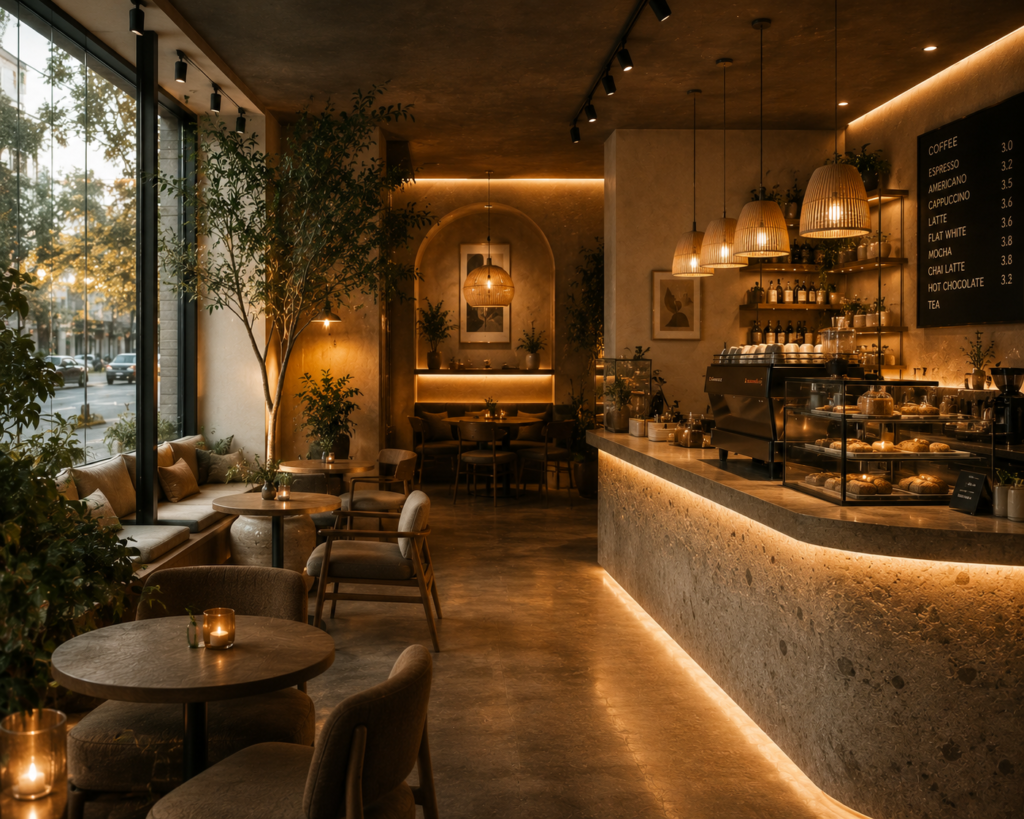
Lighting is one of the most overlooked aspects of café design in 2026, yet it has an outsized effect on how a space is perceived. A coffee shop interior needs layered lighting that supports workflow, highlights the product, and makes guests look good at any time of day. Daylight should be maximised where possible, but not left unmanaged. Glare can make a seating area uncomfortable, while overly bright direct sun can wash out the room.
Soft, warm lighting encourages relaxation, while brighter lighting near counters improves visibility and service speed. Using layered lighting such as ambient, task, and accent adds depth and character. A coffee shop interior needs lighting that supports three distinct modes: the efficient, welcoming tone for morning service; the relaxed working mode for mid-morning laptop customers; and the warm, social atmosphere for afternoon and evening.
Seating Strategy — Variety Drives Loyalty
07. A Café That Fits Every Customer’s Reason to Visit
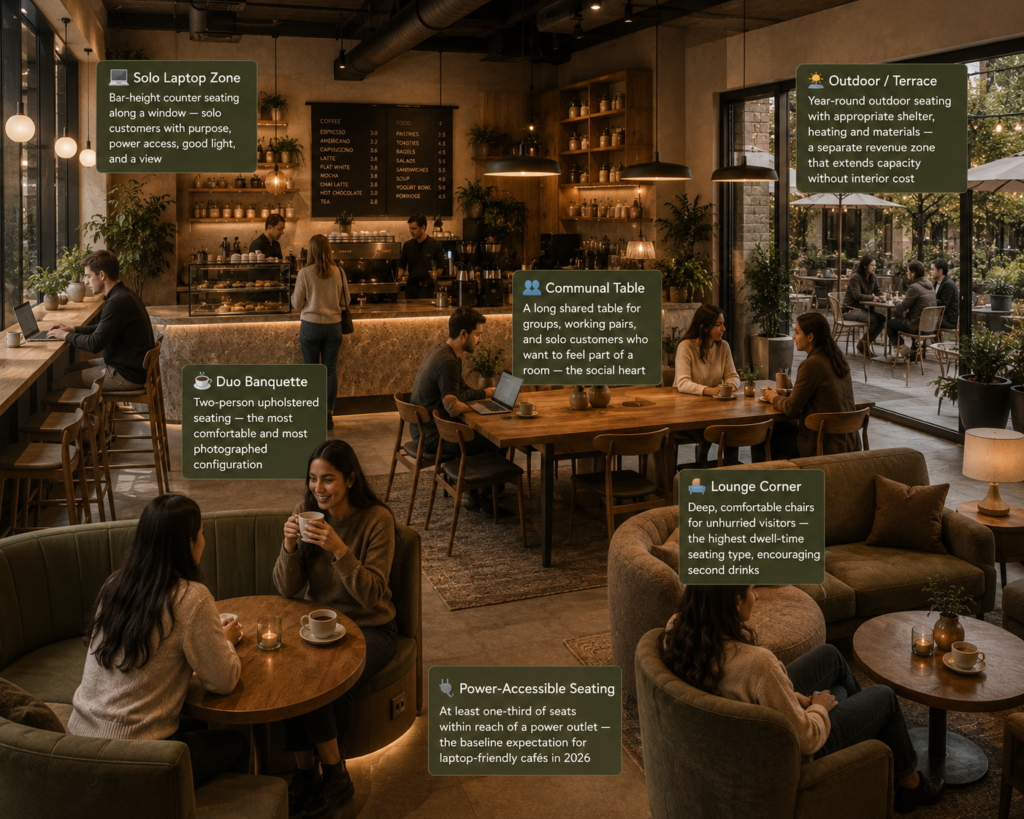
A thoughtful café interior design blends mood, function, and personality into one experience — the lighting that makes a flat white photograph beautifully, the seating that makes a laptop session feel effortless, the colours that make a space feel like “your” spot. Seating variety is one of the most impactful revenue drivers available: a café with only one seating type serves one customer occasion; a café with four seating types serves every occasion its customers have.
💻Solo Laptop ZoneBar-height counter seating along a window — solo customers with purpose, power access, good light, and a view
☕Duo BanquetteTwo-person upholstered seating — the most comfortable and most photographed configuration in any café
👥Communal TableA long shared table for groups, working pairs, and solo customers who want to feel part of a room — the social heart
🛋Lounge CornerDeep, comfortable chairs for unhurried visitors — the highest dwell-time seating type, encouraging second drinks
🌤Outdoor / TerraceYear-round outdoor seating with appropriate shelter, heating and materials — a separate revenue zone that extends capacity without interior cost
🔌Power-Accessible SeatingAt least one-third of seats within reach of a power outlet — the baseline expectation for laptop-friendly cafés in 2026
Biophilic Design — Nature as the Café’s Ambient Layer
08. Plants, Natural Light & Living Materials
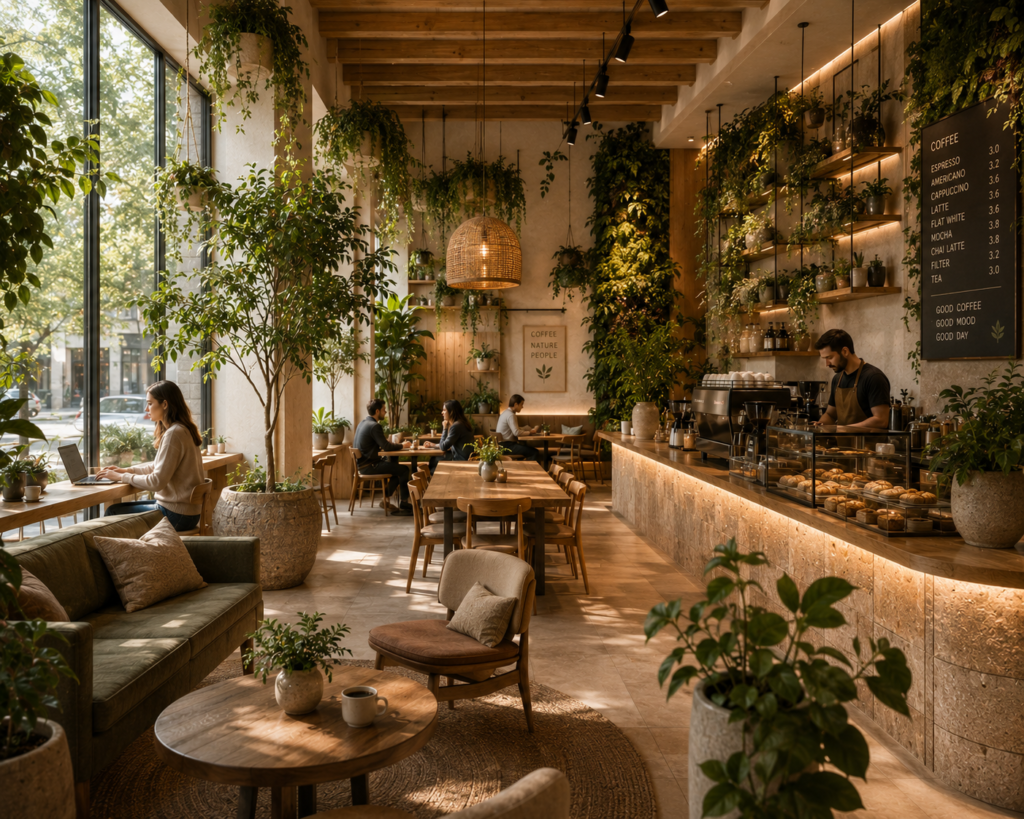
Consider integrating greenery into your interior design with hanging plants, living walls, or even a small indoor garden. From vintage signage to reclaimed wood accents, these elements not only add character but also promote sustainability in your café design.
Biophilic café design in 2026 extends beyond placing a few plants on shelves. Genuine biophilic integration means maximising natural light as the primary ambient layer, using natural wood and stone as the principal surface materials, introducing indoor plants at multiple scales — from trailing plants on high shelves to specimen plants as room anchors — and ensuring the materials throughout the café have the tactile quality of something grown or formed naturally rather than manufactured.
Brand Differentiation — Standing Out in a Sea of Sameness
09. Specific, Ownable, Unmistakably Yours
Although following popular aesthetics can attract customers, it also raises an important question: are cafés creating memorable identities, or are they blending into a sea of nearly identical spaces? Understanding today’s coffee shop design trends reveals why this transformation is happening and how coffee businesses can stand out without sacrificing what customers love.
Brand Differentiation Through Design — 2026 Strategies
- Commission local artwork — a site-specific mural or sculpture from a named local artist gives a café a visual identity that cannot be replicated in another location; it also creates community connection and genuine press interest
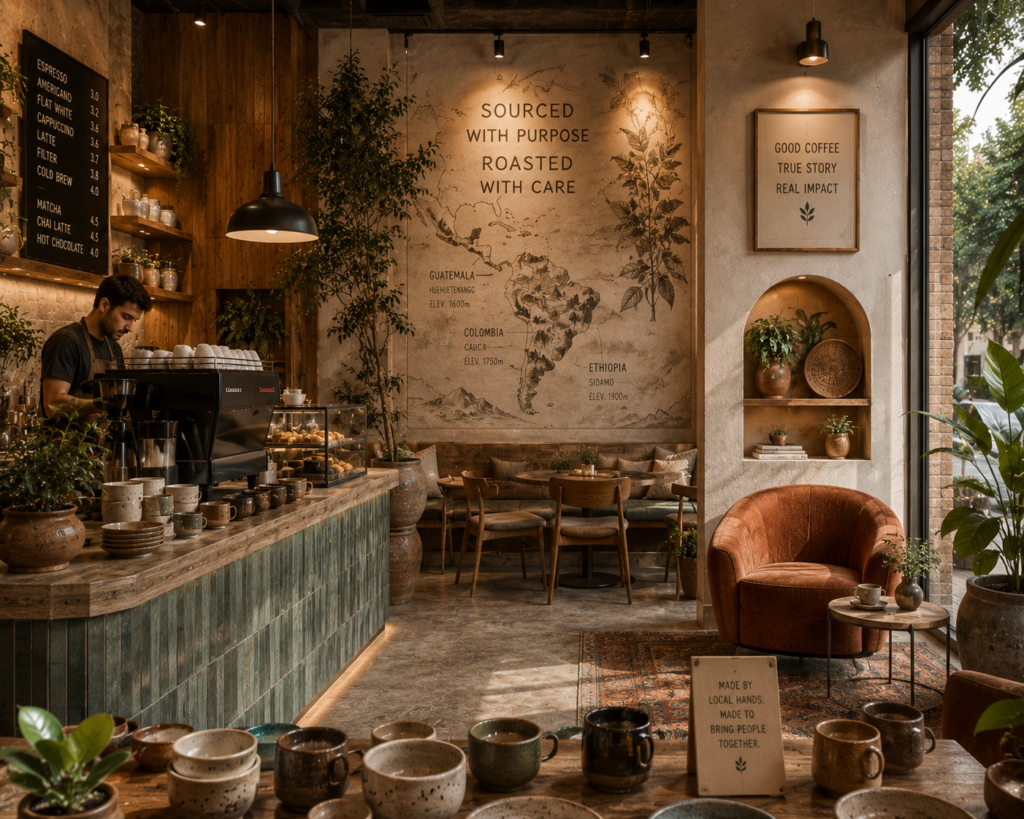
- Use handmade ceramics — bespoke cups, plates, and serving pieces from a named maker are immediately visible to customers, create conversation, and communicate quality and craft at every service moment
- Develop a signature material — one specific material used consistently and confidently throughout — a particular tile, a distinctive stone, a specific wood treatment — that becomes associated with the brand and recognisable across locations
- Tell the origin story through design — cafés and roasters are highlighting traceability and origin stories as key parts of customer communication; the café’s design can carry this narrative through maps, photography, and material choices that reference the geography of the coffee
- Design a signature corner — a beautiful corner with great lighting, a unique chair, and a nice plant that creates an authentic moment guests want to photograph and share
Operations & Flow — Design That Works for Staff
10. Beautiful Spaces That Work Beautifully
One of the biggest mistakes in coffee shop interior design is ignoring operations: beautiful seating is irrelevant if staff cannot move efficiently or guests cannot find the order point. A strong coffee shop interior in 2026 balances mood, function, and durability. Hospitality interiors should be resilient — designed for spills, wear, and constant use. The more practical the design, the more refined it usually feels in the long run.
Operational Design Principles for 2026 Cafés
- The bar counter as the room’s anchor — positioned so that the order point is immediately clear on entry; confusion about where to order is the most common source of first-visit friction in badly designed cafés
- Generous staff circulation behind the bar — a minimum 900mm clear working width behind the counter for single-barista operation; 1200mm for two baristas working simultaneously at peak service
- Durable, easy-clean surface specification — every surface that will be touched, spilled on, or wiped daily should be specified for hospitality use; domestic-grade finishes fail quickly and require costly replacement
- Clear separation of takeaway and dine-in queues — the most common operational failure in high-volume cafés; designing this separation into the layout from day one prevents the friction that alienates both customer groups
- Adequate storage visible only to staff — back-of-house storage integrated into the counter design, invisible to customers but sufficient for all operational
- requirements during a full service without trips to a separate storeroom
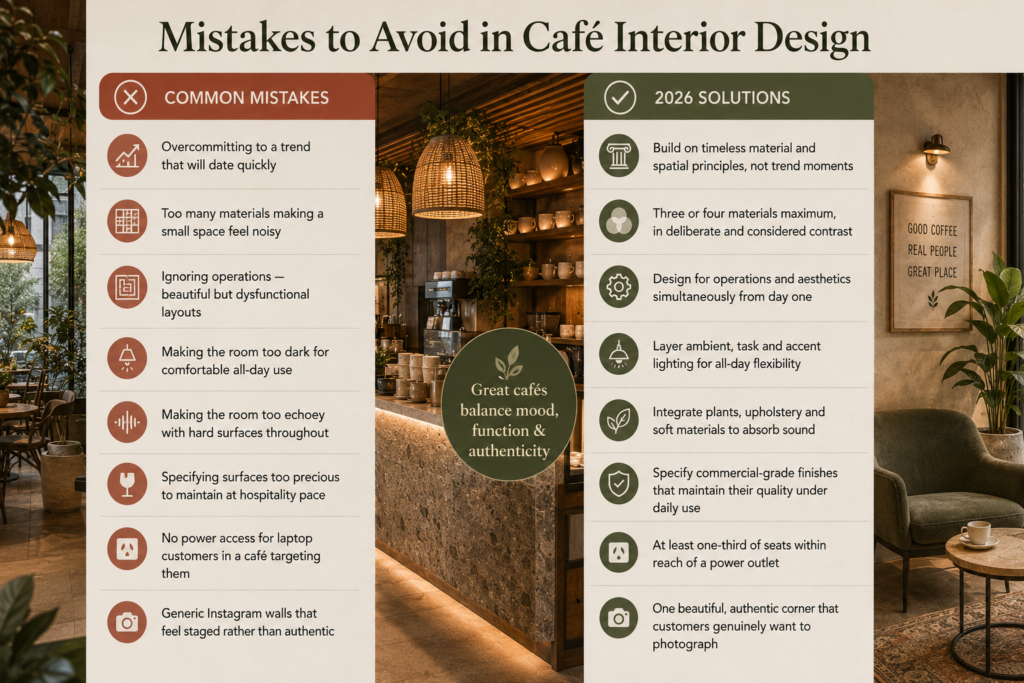
Mistakes to Avoid in Café Interior Design
Common Mistakes
- Overcommitting to a trend that will date quickly
- Too many materials making a small space feel noisy
- Ignoring operations — beautiful but dysfunctional layouts
- Making the room too dark for comfortable all-day use
- Making the room too echoey with hard surfaces throughout
- Specifying surfaces too precious to maintain at hospitality pace
- No power access for laptop customers in a café targeting them
- Generic Instagram walls that feel staged rather than authentic
2026 Solutions
- Build on timeless material and spatial principles, not trend moments
- Three or four materials maximum, in deliberate and considered contrast
- Design for operations and aesthetics simultaneously from day one
- Layer ambient, task and accent lighting for all-day flexibility
- Integrate plants, upholstery and soft materials to absorb sound
- Specify commercial-grade finishes that maintain their quality under daily use
- At least one-third of seats within reach of a power outlet
- One beautiful, authentic corner that customers genuinely want to photograph
Sustainable Café Design — Genuine, Not Performative
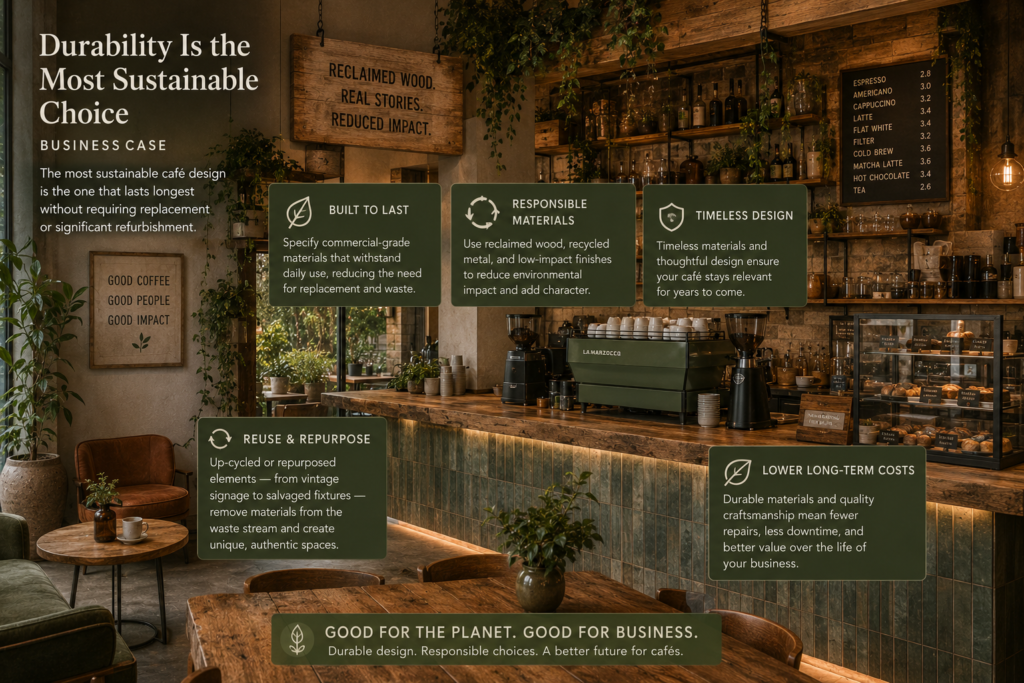
11. Durability Is the Most Sustainable Choice
Sustainability continues to establish itself as one of the main trends in bars and cafés, but with an increasingly practical and demanding approach. It is no longer enough for a space to merely appear sustainable: durable materials, more responsible production processes and solutions that help extend the project’s lifespan are valued. The most sustainable café design is the one that lasts longest without requiring replacement or significant refurbishment.