


Outdoor Living & Garden Design Trends 2026
The 2026 Outdoor Living Shift — From Lawn to Living Room
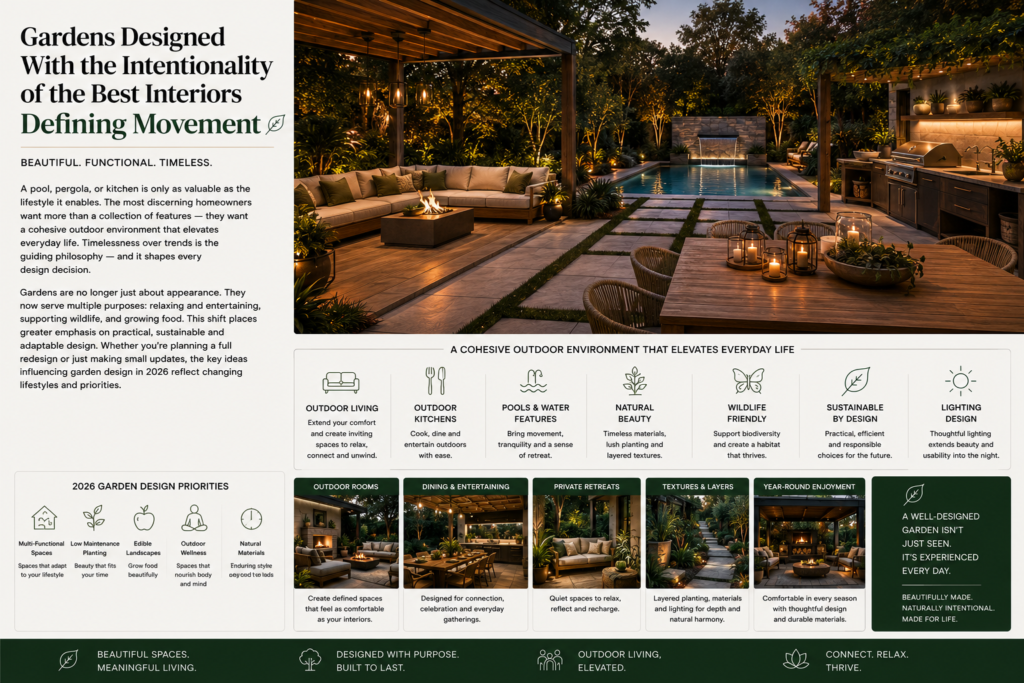
01. Gardens Designed With the Intentionality of the Best Interiors
A pool, pergola, or kitchen is only as valuable as the lifestyle it enables. The most discerning homeowners want more than a collection of features — they want a cohesive outdoor environment that elevates everyday life. Timelessness over trends is the guiding philosophy — and it shapes every design decision.
Gardens are no longer just about appearance. They now serve multiple purposes: relaxing and entertaining, supporting wildlife, and growing food. This shift places greater emphasis on practical, sustainable and adaptable design. Whether you’re planning a full redesign or just making small updates, the key ideas influencing garden design in 2026 reflect changing lifestyles and priorities.
Warm Minimalism — The Interior Trend Takes Over the Garden
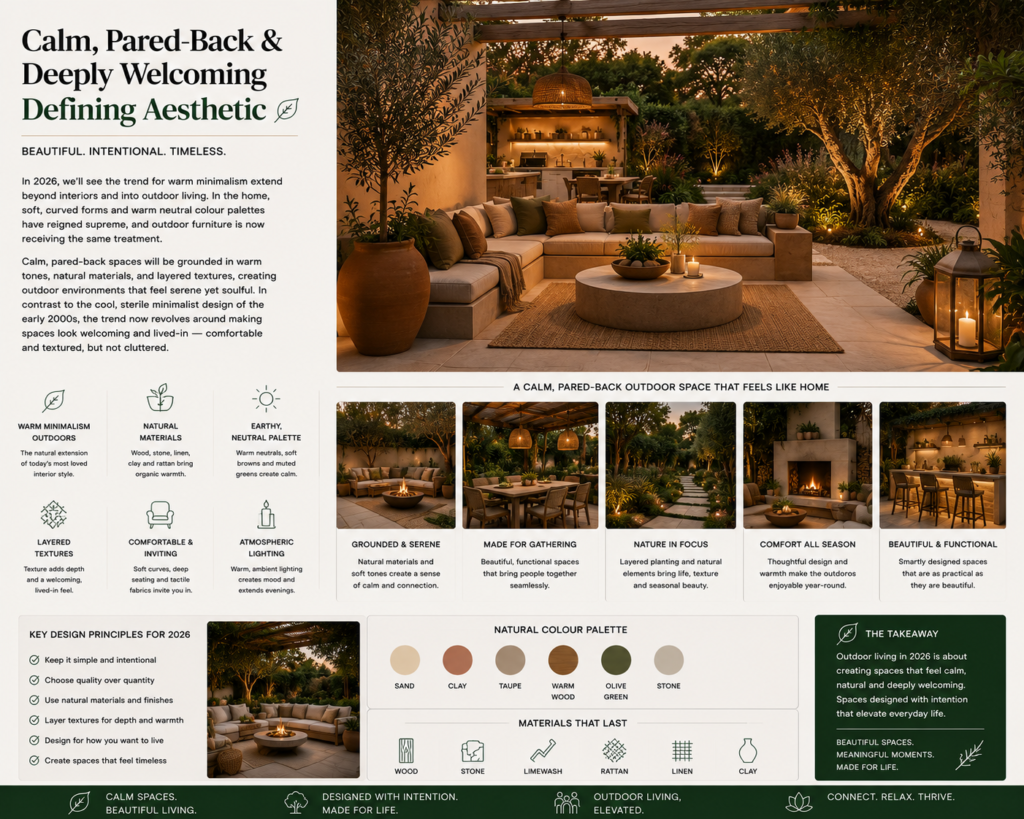
02. Calm, Pared-Back & Deeply Welcoming
In 2026, we’ll see the trend for warm minimalism extend beyond interiors and into outdoor living. In the home, soft, curved forms and warm neutral colour palettes have reigned supreme, and outdoor furniture is now receiving the same treatment. Calm, pared-back spaces will be grounded in warm tones, natural materials, and layered textures, creating outdoor environments that feel serene yet soulful. In contrast to the cool, sterile minimalist design of the early 2000s, the trend now revolves around making spaces look welcoming and lived-in — comfortable and textured, but not cluttered.
The warm minimalism outdoor principle: Views are carefully framed, built edges are softened through planting, and outdoor rooms extend the interior architecture into the landscape to create seamless indoor and outdoor living. Bringing durable materials and local plants together makes for a sustainable garden design built to last.
Zoned Garden Rooms — One Garden, Multiple Destinations
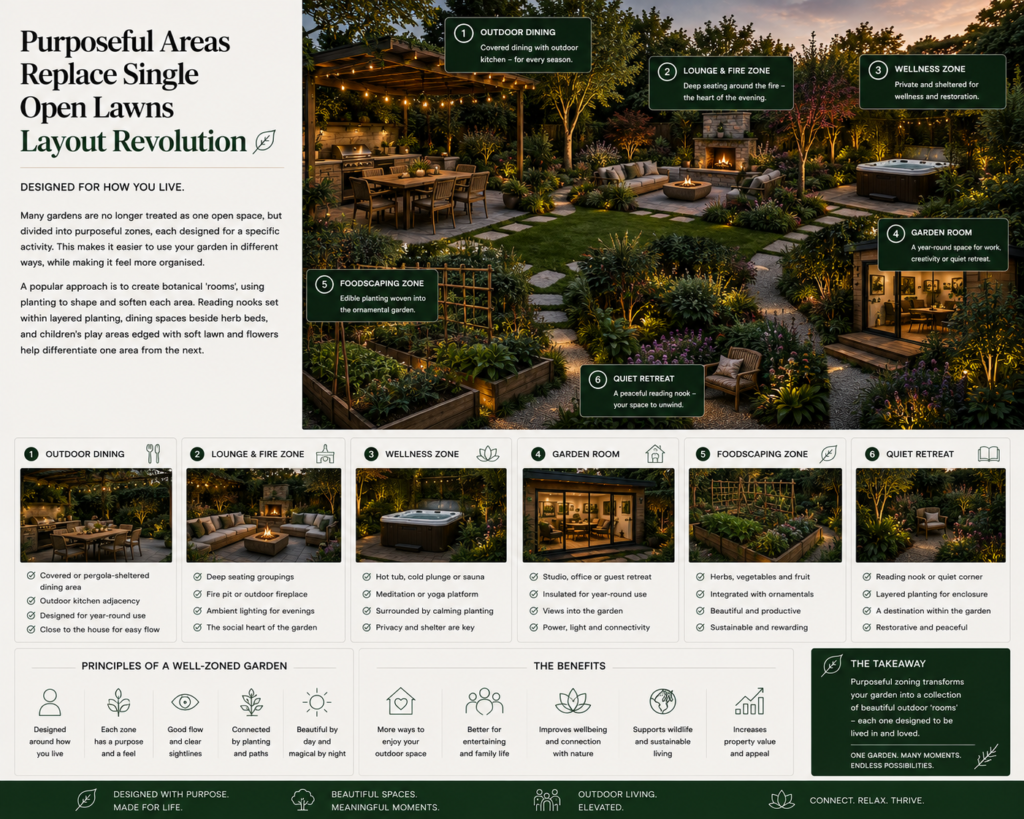
03. Purposeful Areas Replace Single Open Lawns
Many gardens are no longer treated as one open space, but divided into purposeful zones, each designed for a specific activity. This makes it easier to use your garden in different ways, while making it feel more organised. A popular approach is to create botanical ‘rooms’, using planting to shape and soften each area. Reading nooks set within layered planting, dining spaces beside herb beds, and children’s play areas edged with soft lawn and flowers help differentiate one area from the next.
🍽Outdoor DiningCovered or pergola-sheltered dining area with outdoor kitchen adjacency — designed for year-round use
🛋Lounge & Fire ZoneDeep seating groupings around a fire pit or outdoor fireplace — the social heart of the evening garden
🧘Wellness ZonePrivate, sheltered area for hot tub, cold plunge, meditation or yoga — surrounded by calming planting
🌿Garden RoomDedicated enclosed or semi-enclosed garden building for studio, office, or year-round retreat
🌱Foodscaping ZoneIntegrated edible planting — herbs, vegetables and fruit trees woven into the ornamental garden
📖Quiet RetreatReading nook or contemplative corner set within layered planting — a destination within the garden
Outdoor Kitchens — The Garden’s Culinary Destination
04. Convenience Is the New Luxury
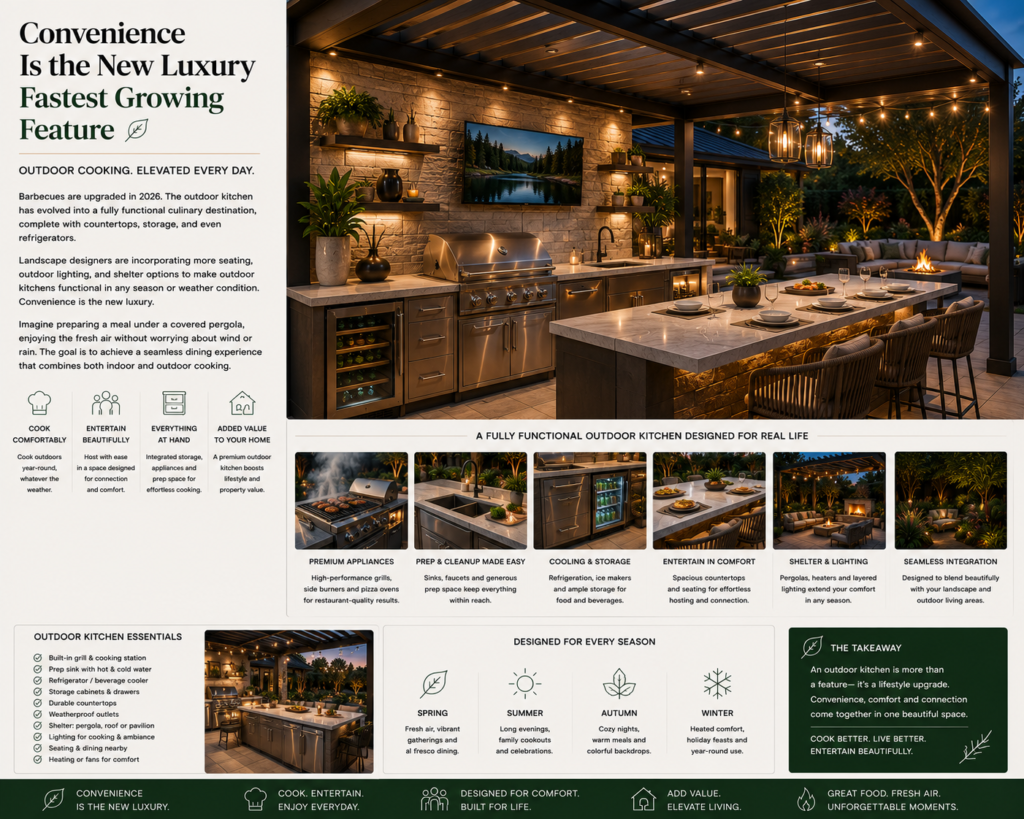
Barbecues are upgraded in 2026. The outdoor kitchen has evolved into a fully functional culinary destination, complete with countertops, storage, and even refrigerators. Landscape designers are incorporating more seating, outdoor lighting, and shelter options to make outdoor kitchens functional in any season or weather condition. Convenience is the new luxury. Imagine preparing a meal under a covered pergola, enjoying the fresh air without worrying about wind or rain. The goal is to achieve a seamless dining experience that combines both indoor and outdoor cooking.
Outdoor Kitchen Design Essentials for 2026
- Permanent shelter — not optional — a covered pergola or roof structure over the cooking area extends usability in every weather condition and immediately upgrades the outdoor kitchen from seasonal to year-round
- Stone or porcelain countertops — weather-resistant surfaces that match the quality of the interior kitchen; granite, sintered stone, and exterior-grade porcelain are all excellent choices
- Built-in refrigeration — an outdoor-rated refrigerator under the counter eliminates constant trips inside and enables genuine meal preparation and entertaining outdoors
- Stainless or marine-grade hardware throughout — any metal component in an outdoor kitchen must be specified for outdoor use; standard indoor finishes corrode quickly in exterior conditions
- Integrated lighting over the cooking zone — task lighting directly over the grill and prep surfaces for safe and enjoyable cooking after dark
- Proximity to the indoor kitchen — the outdoor kitchen should sit close to the internal kitchen to minimise the distance for carrying food, equipment, and supplies between the two
Garden Wellness Zones — Sanctuary in the Open Air
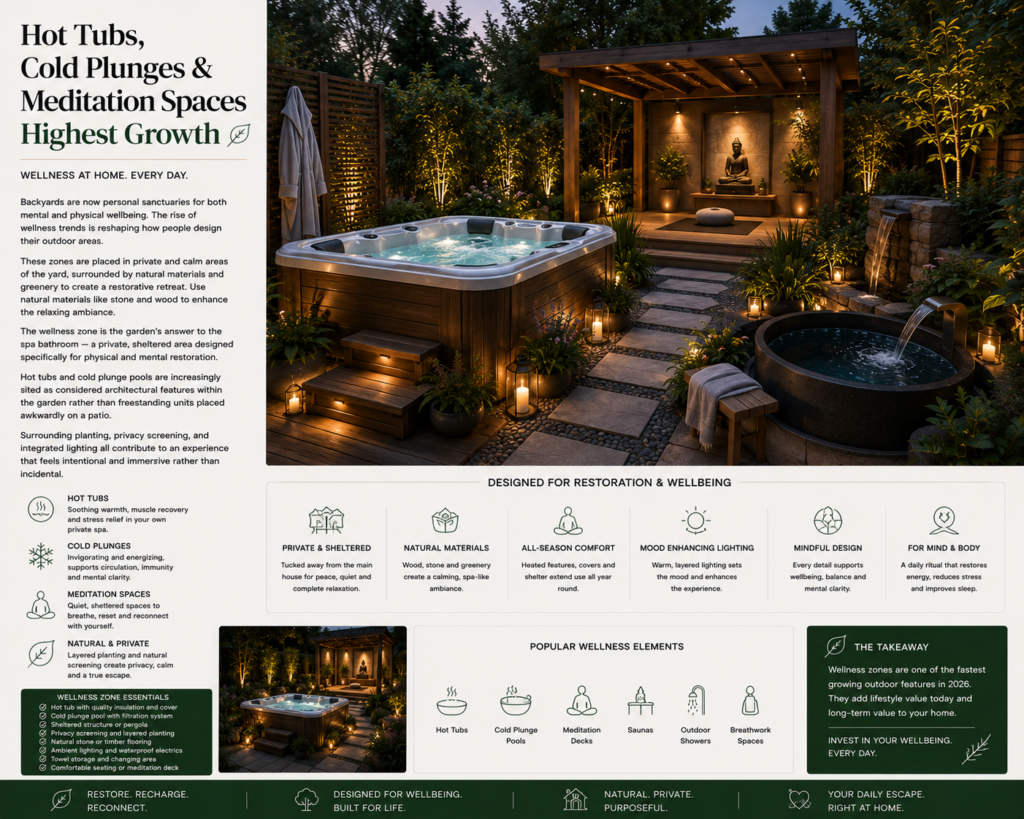
05. Hot Tubs, Cold Plunges & Meditation Spaces
Backyards are now personal sanctuaries for both mental and physical wellbeing. The rise of wellness trends is reshaping how people design their outdoor areas. These zones are placed in private and calm areas of the yard, surrounded by natural materials and greenery to create a restorative retreat. Use natural materials like stone and wood to enhance the relaxing ambiance.
The wellness zone is the garden’s answer to the spa bathroom — a private, sheltered area designed specifically for physical and mental restoration. Hot tubs and cold plunge pools are increasingly sited as considered architectural features within the garden rather than freestanding units placed awkwardly on a patio. Surrounding planting, privacy screening, and integrated lighting all contribute to an experience that feels intentional and immersive rather than incidental.
Smart Garden Lighting — Function, Aesthetics & Mood
06. Gone Are the Harsh Floodlights
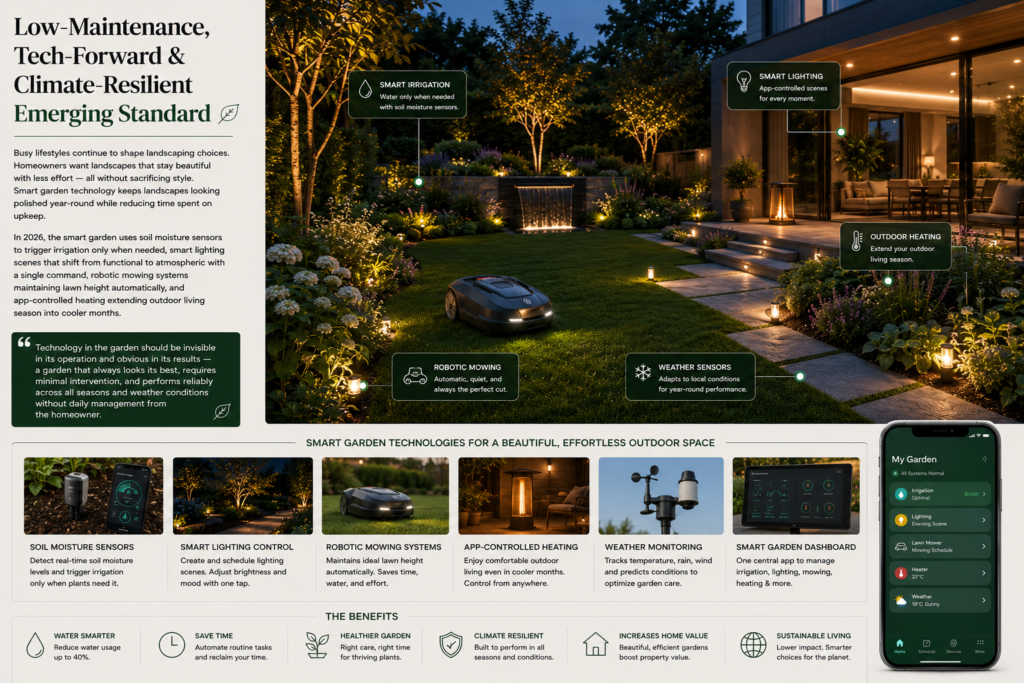
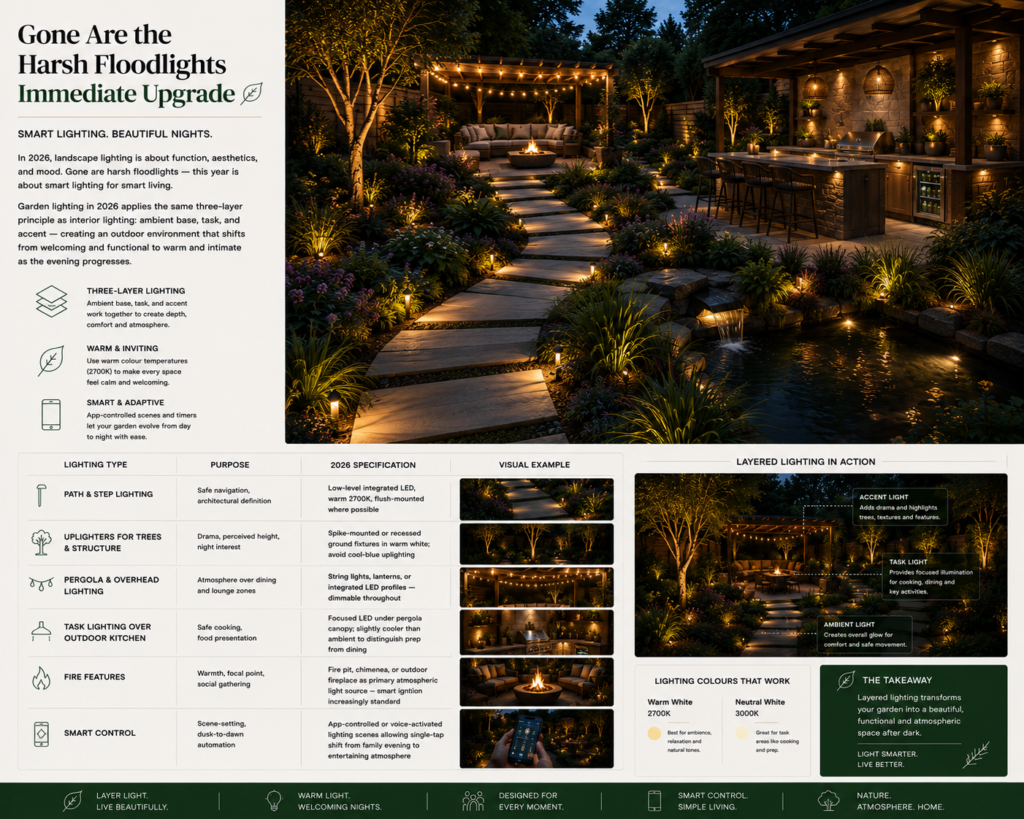
In 2026, landscape lighting is about function, aesthetics, and mood. Gone are harsh floodlights — this year is about smart lighting for smart living. Garden lighting in 2026 applies the same three-layer principle as interior lighting: ambient base, task, and accent — creating an outdoor environment that shifts from welcoming and functional to warm and intimate as the evening progresses.
| Lighting Type | Purpose | 2026 Specification |
|---|---|---|
| Path & Step Lighting | Safe navigation, architectural definition | Low-level integrated LED, warm 2700K, flush-mounted where possible |
| Uplighters for Trees & Structure | Drama, perceived height, night interest | Spike-mounted or recessed ground fixtures in warm white; avoid cool-blue uplighting |
| Pergola & Overhead Lighting | Atmosphere over dining and lounge zones | String lights, lanterns, or integrated LED profiles — dimmable throughout |
| Task Lighting Over Outdoor Kitchen | Safe cooking, food presentation | Focused LED under pergola canopy; slightly cooler than ambient to distinguish prep from dining |
| Fire Features | Warmth, focal point, social gathering | Fire pit, chimenea, or outdoor fireplace as primary atmospheric light source — smart ignition increasingly standard |
| Smart Control | Scene-setting, dusk-to-dawn automation | App-controlled or voice-activated lighting scenes allowing single-tap shift from family evening to entertaining atmosphere |
Nature-Led Planting — Biodiversity as Beauty
07. From Manicured Control to Naturalistic Abundance
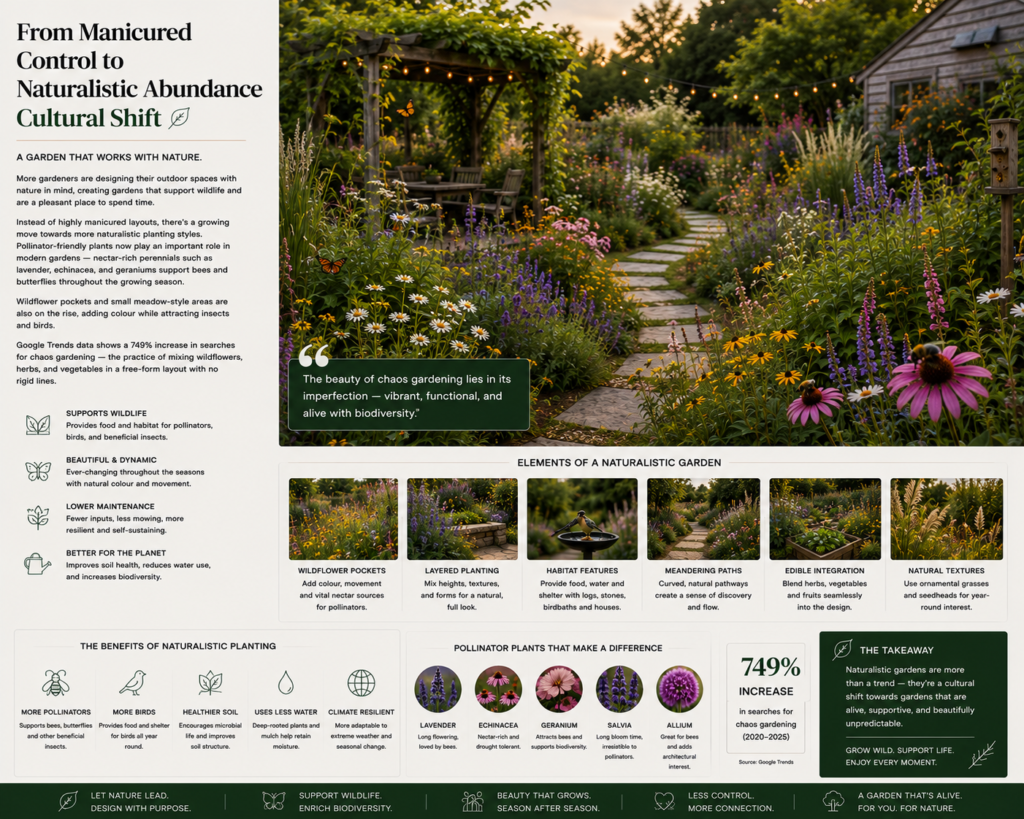
More gardeners are designing their outdoor spaces with nature in mind, creating gardens that support wildlife and are a pleasant place to spend time. Instead of highly manicured layouts, there’s a growing move towards more naturalistic planting styles. Pollinator-friendly plants now play an important role in modern gardens — nectar-rich perennials such as lavender, echinacea, and geraniums support bees and butterflies throughout the growing season. Wildflower pockets and small meadow-style areas are also on the rise, adding colour while attracting insects and birds.
Google Trends data shows a 749% increase in searches for chaos gardening — the practice of mixing wildflowers, herbs, and vegetables in a free-form layout with no rigid lines. “The beauty of chaos gardening lies in its imperfection — vibrant, functional, and alive with biodiversity.” The movement is a deliberate rejection of the clipped, controlled garden aesthetic in favour of something that feels alive, seasonal, and genuinely part of the natural world.
Foodscaping — Edible Gardens That Look Beautiful
08. Fruit, Vegetables & Herbs Woven Into Ornamental Design
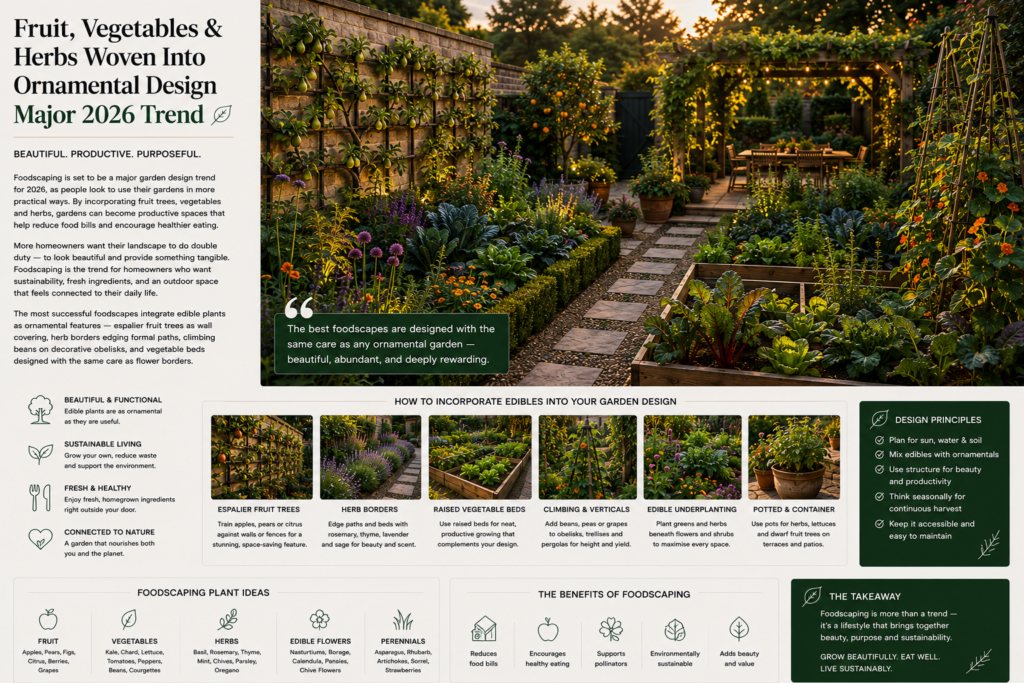
Foodscaping is set to be a major garden design trend for 2026, as people look to use their gardens in more practical ways. By incorporating fruit trees, vegetables and herbs, gardens can become productive spaces that help reduce food bills and encourage healthier eating.
More homeowners want their landscape to do double duty — to look beautiful and provide something tangible. Foodscaping is the trend for homeowners who want sustainability, fresh ingredients, and an outdoor space that feels connected to their daily life. The most successful foodscapes integrate edible plants as ornamental features — espalier fruit trees as wall covering, herb borders edging formal paths, climbing beans on decorative obelisks, and vegetable beds designed with the same care as flower borders.
Outdoor Furniture Trends 2026
09. Interior Quality, Exterior Durability
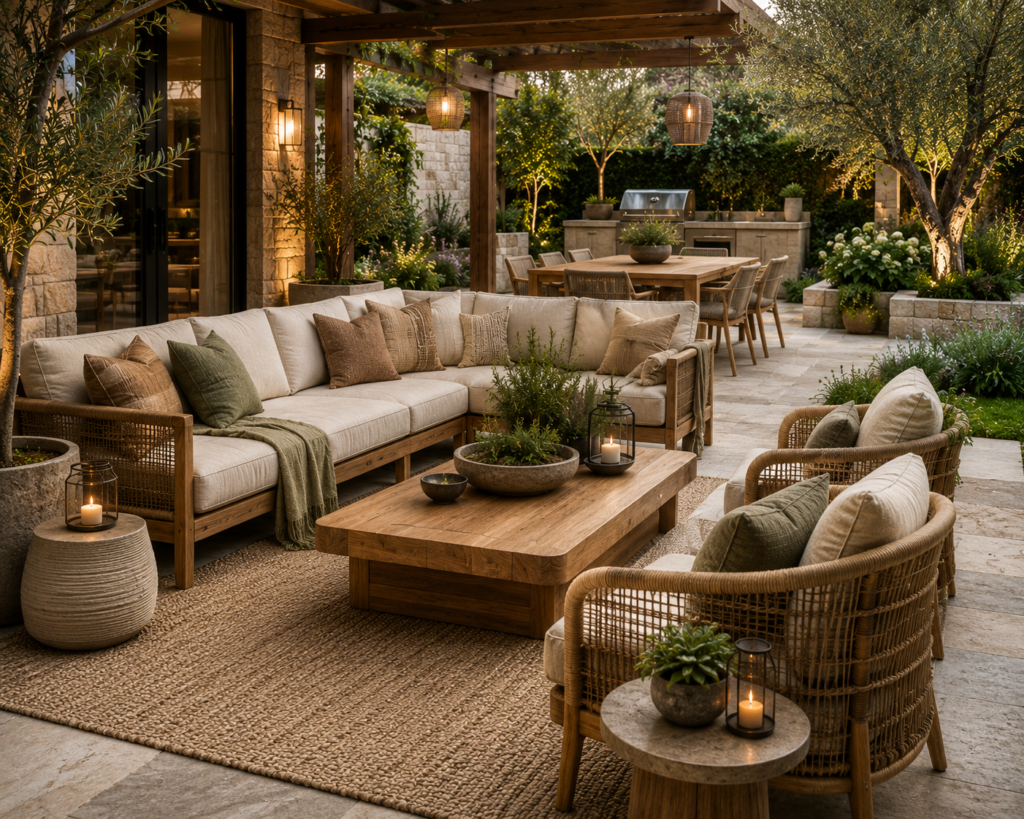
As we continue to blur the boundaries between interior and exterior design, the furniture used in gardens is reflecting this. Warm organic shapes, natural materials, and layered textures are replacing the clean lines and synthetic materials of previous decades. This trend is all about the crosssection of simplicity and cosiness — building warmth and texture through colours and materials.
Outdoor Furniture Trends & Materials for 2026
- Natural teak and FSC-certified hardwood — the premium outdoor furniture material choice; weathers beautifully when left natural or maintained with teak oil; lasts decades when quality is right
- Woven rattan and bamboo accents — organic materials saw a 9% increase in searches; incorporate teak furniture, woven bamboo accents, and natural stone pavers for an organic vibe
- Deep lounge seating — outdoor furniture in 2026 is built for genuine comfort; deep seats, wide arms, and generous cushion depth for extended outdoor time rather than brief garden visits
- Earthy, warm-toned cushion fabrics — outdoor textiles in terracotta, warm stone, sage, and mushroom; UV-resistant and weather-proof performance fabrics in the colour palette of the interior trend
- Multiple conversation scales — 2026 emphasises furniture groupings that invite conversation at multiple scales — a large dining table alongside a smaller fire-side seating cluster alongside a single reading chair in a planted corner
- Black outdoor cushions rising sharply — black cushion searches are up 20% over the past twelve months, reflecting the broader appetite for stronger, more considered outdoor colour choices
Surfaces & Hardscape Materials 2026
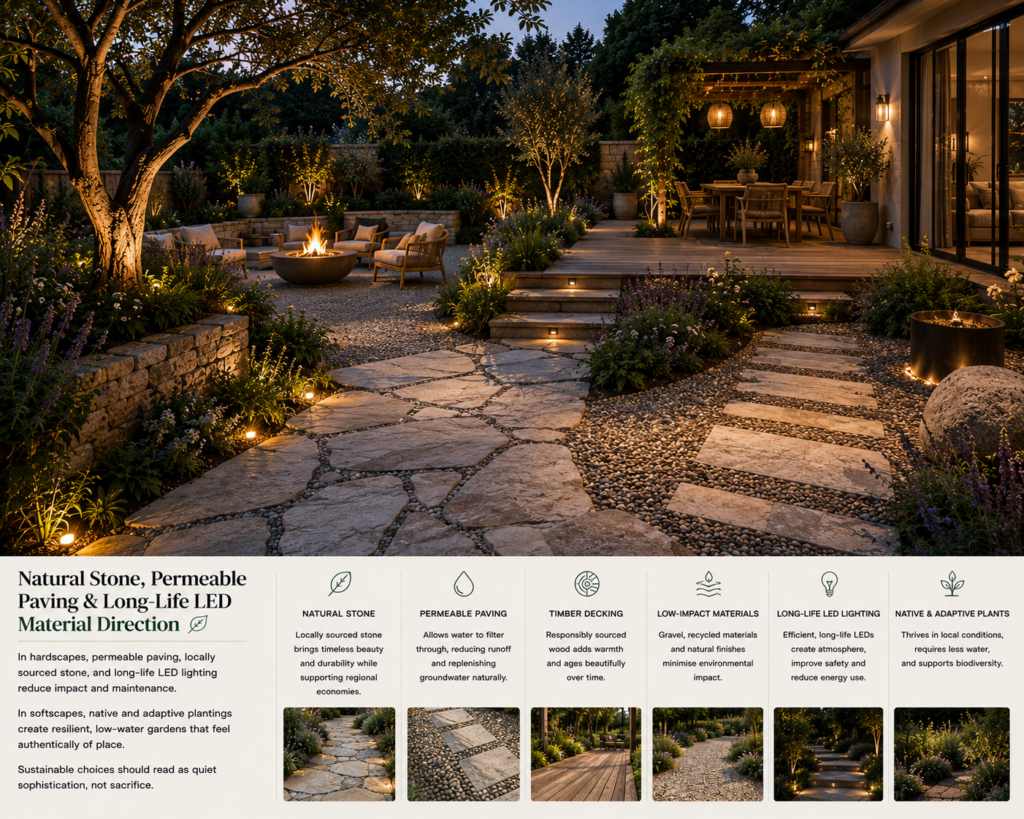
10. Natural Stone, Permeable Paving & Long-Life LED
In hardscapes, permeable paving, locally sourced stone, and long-life LED lighting reduce impact and maintenance. In softscapes, native and adaptive plantings create resilient, low-water gardens that feel authentically of place. Sustainable choices should read as quiet sophistication, not sacrifice.
Hardscape Material Choices for 2026
- Natural stone paving — sandstone, limestone, granite and slate; each develops character with age and connects the outdoor space to its geological setting in a way no manufactured product can
- Permeable paving systems — gravel, permeable block paving, and cellular grass reinforcement systems that allow rainwater to drain naturally rather than overwhelming drainage infrastructure
- Timber decking — FSC-certified hardwood or composite — hardwood decking for premium installations; high-quality composite for low-maintenance alternatives that perform well in wet climates
- Decomposed granite and self-binding gravel — affordable, permeable, and naturalistic surface choices for garden paths and informal zones that complement planting beautifully
- Reclaimed materials — reclaimed brick, reclaimed stone setts, and salvaged slate tiles embedded in new hardscape designs add instant patina and remove material from the waste stream
Sustainable Landscaping — Designed for Climate & Place
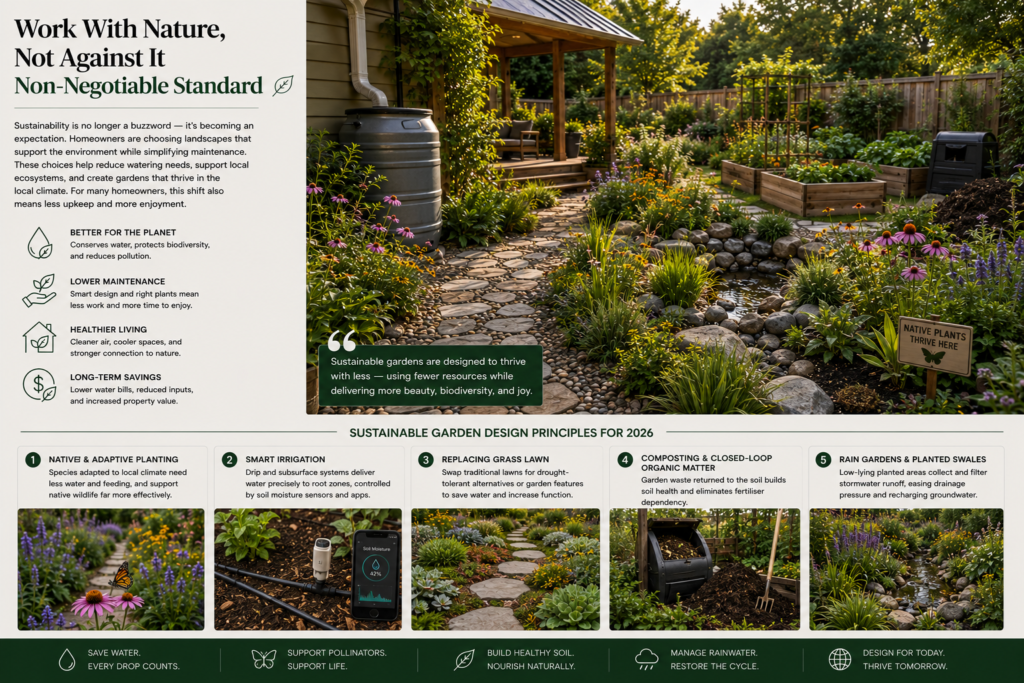
11. Work With Nature, Not Against It
Sustainability is no longer a buzzword — it’s becoming an expectation. Homeowners are choosing landscapes that support the environment while simplifying maintenance. These choices help reduce watering needs, support local ecosystems, and create gardens that thrive in the local climate. For many homeowners, this shift also means less upkeep and more enjoyment.
Sustainable Garden Design Principles for 2026
- Native and adaptive planting — species adapted to local climate conditions require less water, less feeding, and less intervention, while supporting native wildlife far more effectively than exotic alternatives
- Smart irrigation — drip and subsurface irrigation systems delivering water precisely to root zones, controlled by soil moisture sensors and automated by app to avoid overwatering
- Replacing grass lawn — replacing traditional grass lawns with drought-tolerant alternatives or garden features can further improve water conservation and yard functionality
- Composting and closed-loop organic matter — garden waste returned to the soil rather than sent off-site, building soil health and eliminating fertiliser dependency
- Rain gardens and planted swales — low-lying planted areas that collect and filter stormwater runoff, reducing pressure on drainage infrastructure and recharging local groundwater
Smart Garden Technology
12. Low-Maintenance, Tech-Forward & Climate-Resilient
Busy lifestyles continue to shape landscaping choices. Homeowners want landscapes that stay beautiful with less effort — all without sacrificing style. Smart garden technology keeps landscapes looking polished year-round while reducing time spent on upkeep. In 2026, the smart garden uses soil moisture sensors to trigger irrigation only when needed, smart lighting scenes that shift from functional to atmospheric with a single command, robotic mowing systems maintaining lawn height automatically, and app-controlled heating extending outdoor living season into cooler months.
The smart garden philosophy: Technology in the garden should be invisible in its operation and obvious in its results — a garden that always looks its best, requires minimal intervention, and performs reliably across all seasons and weather conditions without daily management from the homeowner.