



Quiet Luxury Interior Design 2026
The Complete Guide to Understated Elegance
What Is Quiet Luxury Interior Design?
01. Elegance That Whispers Rather Than Shouts
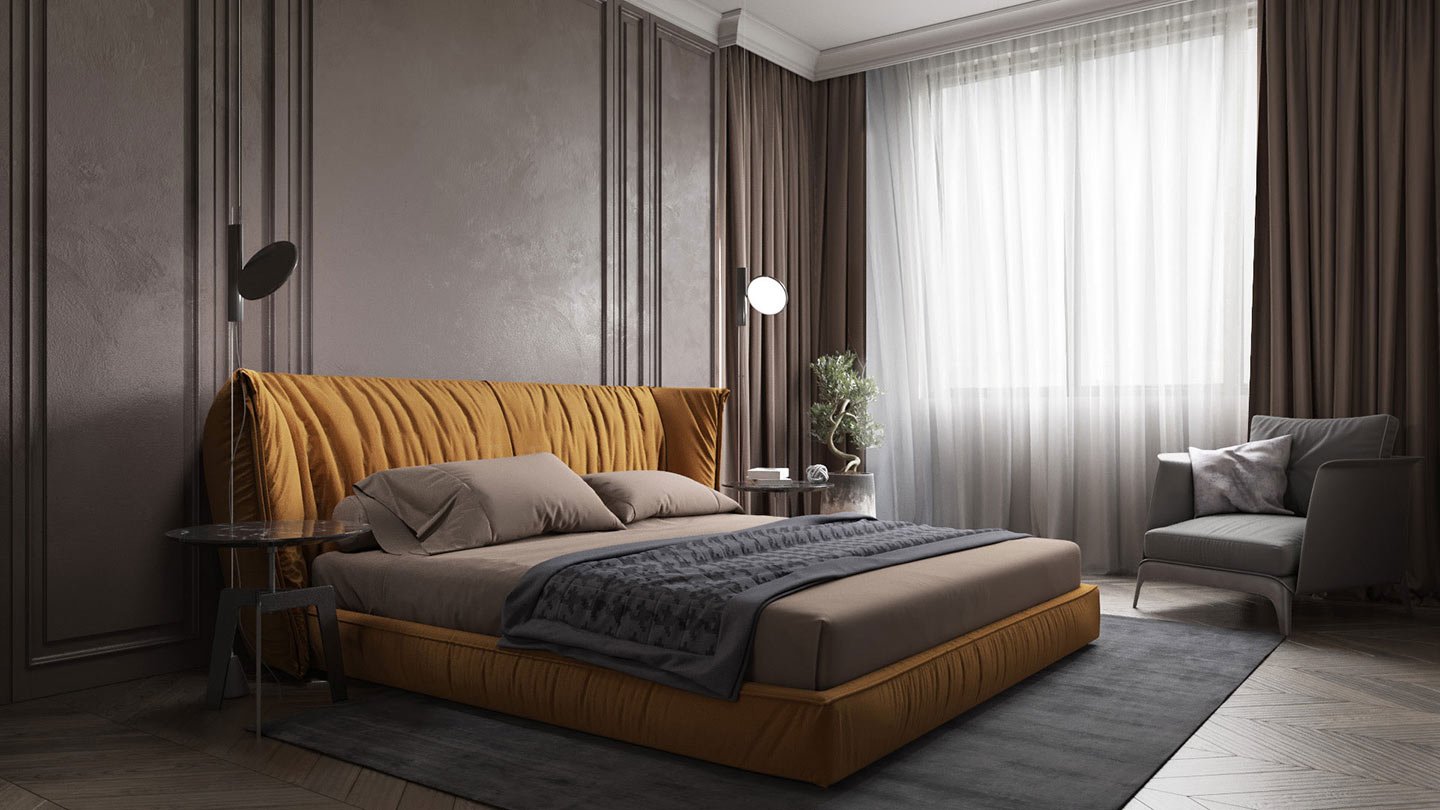
Quiet luxury is the interior design philosophy that defines the most admired homes of 2026. It is often misunderstood as minimalism, but the two are not the same. Minimalism focuses on reduction. Quiet luxury focuses on intention. In 2026, homes are embracing warmth, texture, and character — just without excess. Rooms feel layered and personal, yet visually calm. Nothing is shouting for attention, but everything has been chosen carefully.
The aesthetic originated in fashion — the idea that true luxury does not need a logo — and has translated to interiors with remarkable coherence. The idea of quiet luxury revolves around elegance expressed through simplicity, natural materials, and subtle refinement rather than bold visual statements. Instead of flashy décor, this approach prioritises craftsmanship, timeless forms, and calming palettes built around warm neutrals and soft earth tones.
The quiet luxury standard: Before any object earns a place in a quiet luxury home, it must meet at least two of the following three criteria — it is beautiful, it is well-made, and it is meaningful. Objects that meet all three are the ones that define the space. Objects that meet none are what the approach is designed to exclude.
Part Two
Quiet Luxury vs Minimalism — The Key Differences
| Element | Quiet Luxury | Minimalism |
|---|---|---|
| Philosophy | Have only the best — quality over quantity | Have as little as possible — reduction |
| Warmth | Warm neutrals, earthy tones, rich textures | Often cool whites, clean lines, flat surfaces |
| Objects | Fewer objects, each with significant presence | Almost no objects — maximum emptiness |
| Personality | Deeply personal — collected, meaningful pieces | Often anonymous — designed to not impose |
| Materials | Natural, tactile, and varied — stone, linen, wood | Often smooth, hard, and uniform |
| Lighting | Warm, layered, atmospheric — creates mood | Often functional and even throughout |
| Feel | Refined, warm, lived-in, effortlessly elegant | Clean, considered, sometimes austere |
| Goal | A home that feels like the best version of you | A home free from the visual weight of things |
The practical difference: A quiet luxury bedroom may have a beautifully aged ceramic lamp, a stack of three books you are genuinely reading, a meaningful photograph in a quality frame, and a plant. A minimalist bedroom would have none of these. Both can be beautiful — but quiet luxury asks “what is the best thing to have here?” while minimalism asks “what can I remove?”

The Quiet Luxury Colour Palette 2026
02. Tonal Warmth — The Art of the Warm Neutral
The quiet luxury palette invites homeowners to curate their spaces with tonal harmony — the quiet interplay between ivory, linen, and sand tones illuminated by natural sunlight. This is colour used not for contrast or drama, but for depth and warmth. The palette is not monochrome — it contains genuine variation — but that variation exists within the same warm family of tones rather than across contrasting hues.
Earth tones, warm whites, caramel, taupe, and muted blues replace clinical greys and bright whites. The result is spaces that feel immediately calm — because the eye is not being pulled between competing colours, it can rest on the quality of the materials and the character of the objects themselves.
Warm IvoryWalls + ceilings
Warm LinenTextiles + upholstery
CaramelAccessories + accents
Warm StoneHard surfaces
TaupeFurniture + rugs
Deep UmberGrounding accent
The tonal palette rule: Choose your palette from within one warm neutral family — ivory at the lightest, umber at the deepest — and use all tones consistently throughout the home. The variation between tones creates visual interest; the consistency of the family creates calm. These colours create depth without contrast, allowing rooms to feel calm, cohesive, and naturally elegant.

Materials & Finishes — The Language of Quiet Luxury
03. Matte, Natural, and Tactile — Always
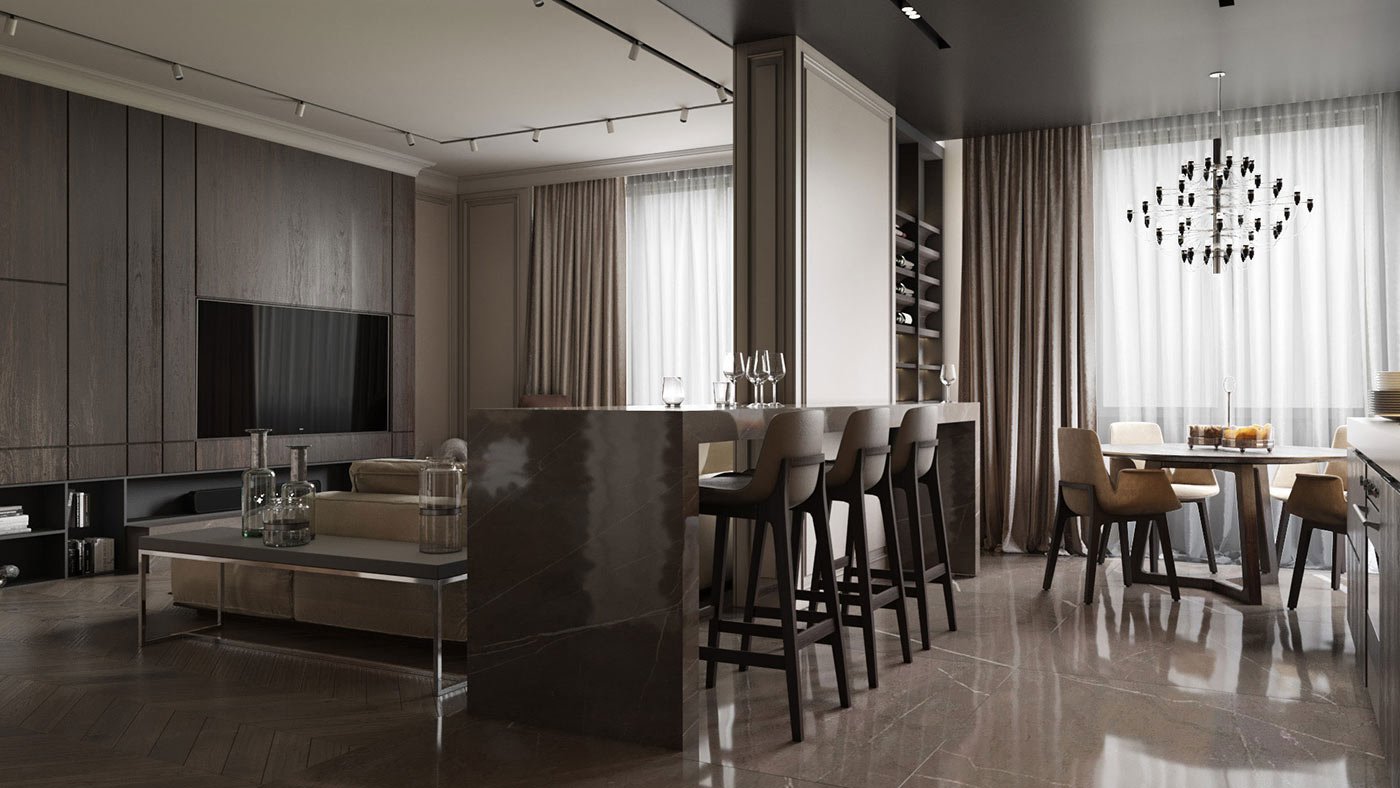
Natural stone with soft veining is a cornerstone of quiet luxury interiors 2026. Materials like marble, travertine, and honed limestone bring subtle texture and depth without overwhelming a space. The gentle veins add visual interest while maintaining a calm, elevated aesthetic.
Matte finishes are becoming a defining feature of quiet luxury interiors 2026. Unlike glossy surfaces that reflect light sharply and feel flashy, matte textures offer softness, depth, and understated elegance. They allow materials to express themselves quietly. Matte metal hardware, brushed stone, and gently textured woods feel refined and calm.

Furniture Principles — Investment Pieces Over Impulse Buys
04. Fewer Pieces, Each Genuinely Considered
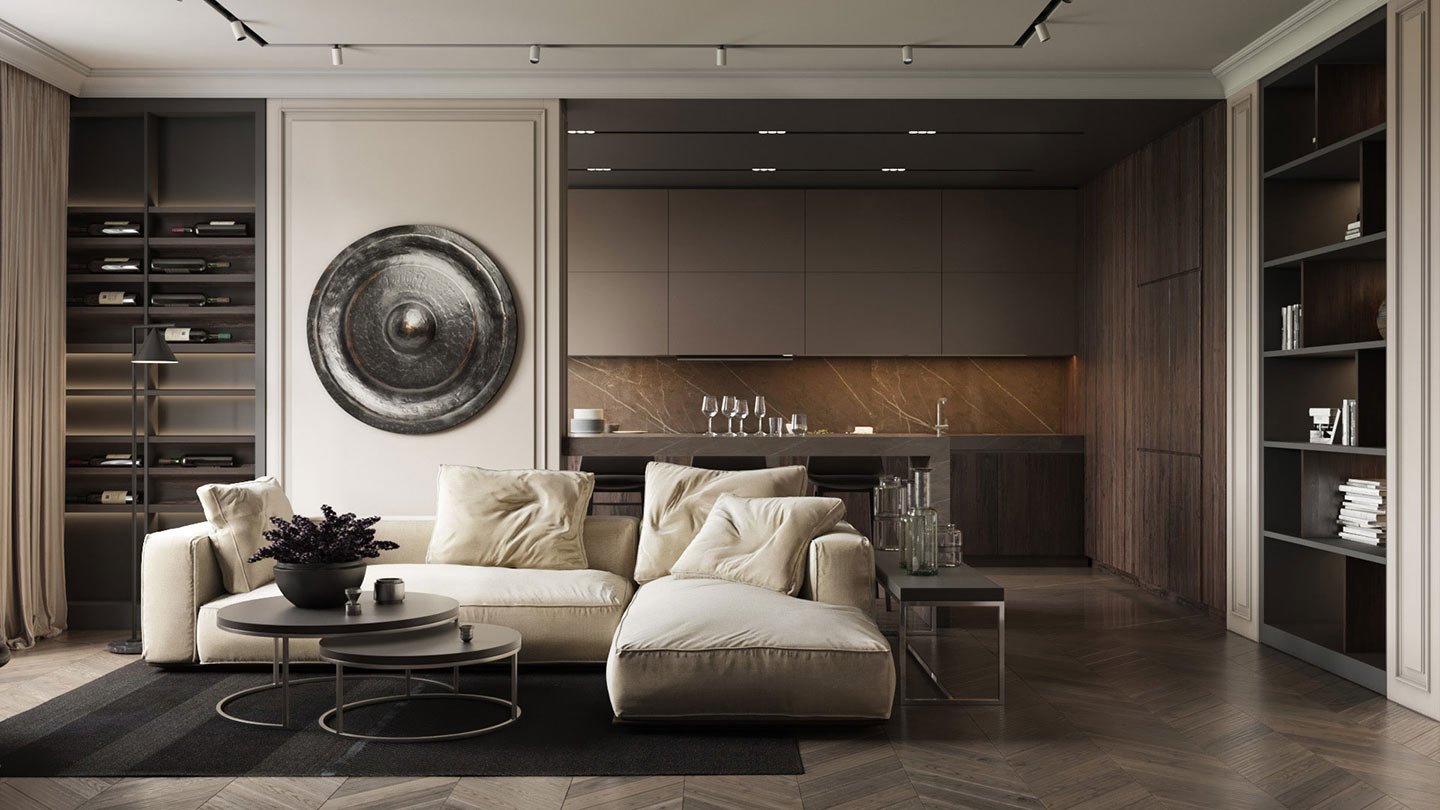
The most effective way to express quiet luxury interiors is to prioritise investment pieces — timeless sofas, carefully chosen furniture that carries quality in its construction and materials. The quiet luxury approach to furniture is the antithesis of fast decor: buy slowly, buy well, and buy only what genuinely belongs.
Rather than buying more, homeowners invest in fewer, better things — solid furniture that can be repaired, timeless finishes that do not date quickly, and handcrafted pieces with a story to tell. This approach is simultaneously more sustainable, more economical long-term, and more beautiful than the alternative.
Quiet Luxury Furniture Principles
- Invest in upholstered pieces above all others — a quality sofa in natural linen or bouclé is the centrepiece of a quiet luxury living room. It should feel as beautiful to sit in as it looks to observe
- Choose curves over sharp angles — curved architectural elements define quiet luxury in 2026, softening spaces and creating a sense of welcoming elegance that hard right angles cannot. Rounded sofas, oval tables, arched openings
- Natural wood over synthetic board — the difference between solid oak and MDF is immediately apparent at close range. In quiet luxury rooms where every piece is seen clearly, this distinction matters enormously
- Choose pieces that can be repaired — a sofa with a hardwood frame and removable cushion covers can last a generation. A glued-composite sofa cannot. Repairability is a quality signal
- Consider provenance — knowing where a piece was made, who made it, and what it is made of is part of the quiet luxury relationship with objects. Anonymous mass production is the opposite of this
- Buy one and wait — it is better to live with one genuinely good piece and an empty space beside it than to fill the space with a compromise. The patience to wait for the right piece is itself a quiet luxury discipline

Quiet Luxury Lighting — Atmosphere as Architecture
05. Warm, Layered, and Entirely Intentional
Lighting in quiet luxury interiors is treated as architecture — a structural element of how the room feels rather than a functional afterthought. Lighting becomes a core element, offering comfort and atmosphere without overpowering the room. The goal is not illumination in the functional sense but atmosphere in the experiential sense: rooms that shift from one quality of light to another as the day progresses, and that feel genuinely beautiful in the evening.
Quiet Luxury Lighting Formula
- No overhead spotlights — recessed downlighters create flat, commercial-feeling light that is antithetical to the quiet luxury atmosphere. Replace with pendants, sconces, and lamps
- All 2700K warm white — the amber warmth of 2700K lighting is what makes materials glow rather than bleach. Natural stone, warm wood, and linen all look dramatically more beautiful under warm white than cool white
- Multiple sources at different heights — a pendant, two table lamps, and a floor lamp in one room creates the layered pools of light that define quality atmospheric lighting
- Statement pendants as sculptural objects — in a quiet luxury home, the pendant light is chosen as carefully as any piece of art. Woven rattan, hand-blown glass, aged brass, and hand-thrown ceramic shades all work beautifully
- Dimmer switches on every circuit — the ability to modulate light levels as the evening progresses is one of the most impactful practical investments in any home
- Candlelight as the final layer — a cluster of quality beeswax or soy candles in beautiful vessels provides the most atmospheric, most intimate light available. No electrical fitting comes close

Curated Objects & Accessories — Less, Better, More Present
06. Objects That Have Been Chosen Rather Than Bought
Decor in quiet luxury interiors feels collected, not styled. Rather than filling shelves and surfaces, homeowners choose fewer objects with stronger presence. Each object is allowed space, which elevates its impact and keeps the room from feeling cluttered.
The practical application of this principle is one of the most transformative things you can do to any room: take everything off every surface, then return only the objects that meet the quiet luxury standard — genuinely beautiful, genuinely well-made, or genuinely meaningful. For most surfaces, this means returning two or three objects rather than ten. The ones that return earn the right to be seen properly.
The Quiet Luxury Object Checklist
- Handmade ceramics — a handthrown bowl, a vessel, a lamp base. The irregularity of handmade is the opposite of the uniformity that quiet luxury rejects
- Quality books, displayed honestly — not arranged for appearance but because they are genuinely being read or have been genuinely read. Three books stacked is better than thirty arranged by colour
- One plant, chosen for its form — architectural rather than decorative. A single stem in a beautiful ceramic vase. A small olive tree. A trailing pothos allowed to grow naturally
- One piece of meaningful art — not a mass-produced print bought for its colour, but a piece that has a genuine connection to the person who owns it. Original work, an inherited print, a photograph taken somewhere that matters
- A quality candle in a beautiful holder — scent is treated as part of interior design in quiet luxury homes — not an afterthought. Botanical notes, tea-based blends, and soft florals support the mood of a space rather than dominate it.

Quiet Luxury on a Budget
07. Intention Costs Nothing — Quality Costs Less Than You Think
Quiet luxury is not the exclusive preserve of high budgets. The foundational element of the aesthetic — intention — is entirely free. Editing aggressively, clearing surfaces, choosing one good thing over three compromised ones, shopping second-hand for natural material furniture, and maintaining spaces with genuine care costs very little. The most authentically quiet luxury homes are often the ones built most gradually and most carefully on the most modest means.
Free No spend
- Edit every surface — remove everything that doesn’t meet the standard
- Rearrange furniture to float away from walls
- Replace bulbs with warm 2700K LEDs already owned
- Fold a throw over the sofa — draped, not neatly folded
- Clear the kitchen worktops entirely
- Decant products into existing glass containers
Low Spend Under £60
- Linen cushion covers in warm neutral tones — transform any sofa
- One quality candle in a beautiful ceramic vessel
- A natural fibre bath mat — teak or organic cotton
- Warm 2700K bulbs throughout the home
- One handmade ceramic vessel or bowl for a key surface
- A reed diffuser in a botanical or woody scent
Investment Buy once well
- One quality linen sofa or armchair — the room’s anchor
- Organic linen bedding in warm ivory — the bedroom’s centrepiece
- A quality wool rug in warm stone — buy second-hand if possible
- One statement pendant light in aged brass or handmade ceramic
- A solid wood dining table — second-hand oak or walnut
- Organic cotton towels in ivory — the bathroom’s defining element
The second-hand quiet luxury route: A solid oak dining table bought second-hand from a house clearance is more authentically quiet luxury than an identical new piece — it has provenance, character, and the beautiful patina of use. Shopping second-hand for natural material furniture is simultaneously the most sustainable, most economical, and most aesthetically appropriate approach to building a quiet luxury home.

What to Avoid — The Anti-Quiet Luxury
08. The Elements That Undermine the Aesthetic
What to Avoid in a Quiet Luxury Home
- Glossy surfaces — high-gloss kitchen cabinets, lacquered furniture, polished chrome fixtures. Glossy surfaces reflect light sharply and feel commercial rather than refined. Replace with matte, honed, and brushed alternatives throughout
- Visible branding or logos — designer logos on cushions, branded accessories, obvious status signals. The entire point of quiet luxury is that quality speaks for itself without needing to announce itself
- Stark white and cool grey — one of the most noticeable shifts in quiet luxury interiors is the move away from bright white spaces. These colours create depth without contrast, allowing rooms to feel calm, cohesive, and naturally elegant. Replace with warm neutrals
- Synthetic fabrics — polyester cushion covers, acrylic throws, synthetic velvet. These lack the tactile quality and aging grace of natural fibres and undermine the material quality that quiet luxury depends upon
- Cluttered surfaces — accessories, collections, and decorative objects in quantity. Each additional object reduces the space available to each other object. In quiet luxury, space around objects is as important as the objects themselves
- Trend-driven purchases — anything chosen because it is fashionable this season rather than because it is genuinely beautiful and lasting. The quiet luxury test is simple: will I love this in twenty years? If the honest answer is probably not, the answer is no
- Overhead spotlights as primary lighting — recessed downlighters create the flat, functional light of offices and supermarkets. They are not appropriate for a home designed around atmosphere and warmth


